

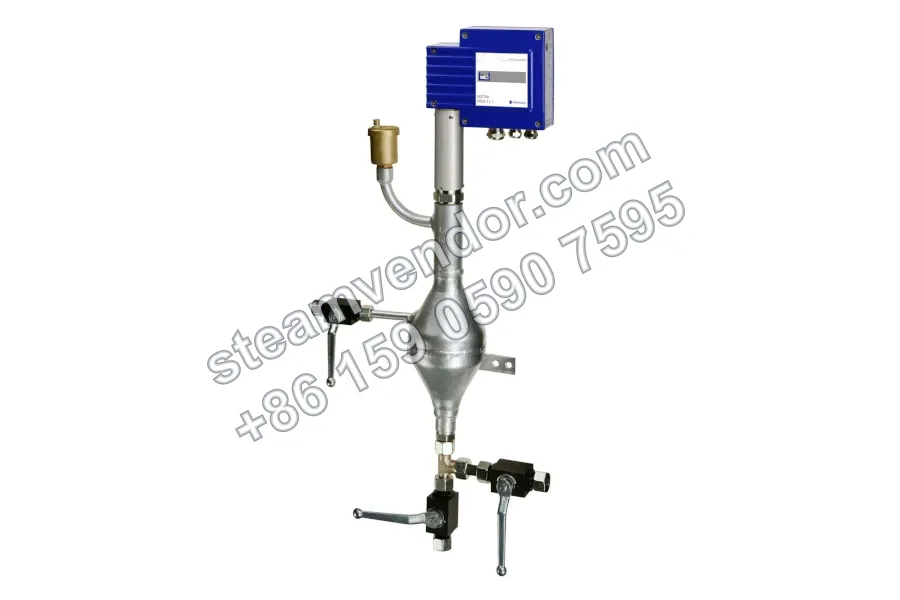
The Gestra ORGS11-2 is an oil detector based on the conductivity measurement principle. It detects oil ingress by identifying the difference in electrical conductivity between water and oil. The device has a maximum operating pressure of 6 bar and a maximum operating temperature of 110 °C. It triggers an alarm when the accumulated oil volume reaches approximately 50 ml and holds multiple marine certifications, including BV, GL, and LR. It is suitable for monitoring oil contamination in cooling water systems and marine cooling water systems, helping engineers select suitable equipment for reliable oil ingress detection and alarm functions.
Gestra Oil Detector ORGS11-2 product image
1 / 1
ORGS11-2 Oil Detection Alarm | Gestra
Conductivity-based oil contamination detector for cooling water that triggers an alarm after an intrusion of approximately 50 ml; suitable for marine cooling water systems.
Genuine product assurance
We can help verify product data and purchasing details.
Model confirmation
Confirm model, connection and key options before ordering.
After-sales support
After-sales communication support is provided according to the order agreement.
Specifications
- Detection principle
- Conductivity-based measurement; detects oil intrusion through the difference in electrical conductivity between water and oil
- Detectable media conditions
- Liquids that are insoluble in water, non-emulsified and less dense than water; or liquids with a conductivity below the set response sensitivity
- Alarm trigger volume
- Approx. 50 ml
- Operating pressure
- 6 bar
- Operating temperature
- 110 °C
- Operating flow rate
- 100 l/h to 300 l/h, 200 l/h recommended
- Pressure drop
- 0.06 bar (under test conditions)
- Response sensitivity
- 10 µS/cm or 0.5 µS/cm, selectable via coded switch
- Supply voltage
- 230 V ±10%, 115 V ±10%, 50/60 Hz; 24 V ±10%, 50/60 Hz (optional)
- Power consumption
- 5 VA
- Control output
- 2 potential-free changeover contacts, 8 A 250 V AC / 30 V DC, cos φ = 1
- Power-off delay
- 3 s
- Degree of protection
- IP65, to DIN EN 60529
- Maximum ambient temperature
- 70 °C
- Storage and transport temperature
- -40 to +80 °C
- Electrode mechanical connection
- Screwed connection G 1 A, ISO 228
- Key wetted materials
- Screw-in body and electrode rod: 1.4571 / X6CrNiMo17-12-2
- Piping connections
- Water inlet and drain: compression fittings EO 15L; water outlet: compression fitting EO 12L
- Marine approvals
- BV 17515-B0; BV GL 17106-00 HH; LR 07-20031 (E1)
- Hazardous area suitability
- Not to be used in potentially explosive atmospheres (2014/34/EU)
Application scenarios
Oil ingress detection in cooling water systems
Used to detect and alarm oil ingress in cooling water systems. The conductivity measurement principle identifies the difference in electrical conductivity between water and oil, triggering an alarm when the oil volume reaches approximately 50 ml.
Oil contamination monitoring in marine cooling water systems
Used to detect and alarm oil ingress in marine cooling water systems. The product holds BV, GL, and LR marine certifications and identifies oil ingress in cooling water through the conductivity measurement principle.
Installation & maintenance notes
Operating flow control
During installation and operation, maintain the operating flow rate between 100 l/h and 300 l/h. A flow rate of 200 l/h is recommended.
FAQ
How does the ORGS11-2 work, and what role does it play in a cooling water system?
The ORGS11-2 monitors cooling water for oil through a module consisting of the ORGS11-1 measuring electrode and a measuring vessel. The conductivity of the water indicates the water level: when oil enters and accumulates above the oil film, the electrode is immersed, the output contact is energized and an alarm is triggered. Activation occurs at an oil volume of approximately 50 ml.
How do I determine the suitable flow rate and pressure range for the ORGS11-2 when selecting a unit?
The technical documentation specifies an operating pressure of 6 bar and a recommended flow rate of approximately 200 l/h. The actual installation must be calculated taking into account line resistance, orifice bore and the system layout.
Which liquids can the ORGS11-2 detect, and what oil detection range does it cover?
The device detects all substances that are insoluble in water, non-emulsified and less dense than water, as well as liquids whose conductivity is below the set response sensitivity. As oil is non-conductive, its presence triggers the alarm and indicates oil intrusion.
What are the key installation and maintenance requirements to ensure reliable alarm operation?
The water sample must be taken from the highest point downstream in the cooling water system and must flow continuously through the oil detector and the ORGS11-2, at a recommended flow rate of approximately 200 l/h. The system must ensure that the sample enters the unit at the bottom of the measuring vessel; piping should avoid narrow sections wherever possible to prevent emulsification, and the electrical installation must follow the applicable wiring standards and use suitable fuses.
What certifications and approvals does the ORGS11-2 have?
The device is type-approved for marine applications and complies with the requirements of the Low Voltage Directive and the EMC Directive; it is not suitable for use in potentially explosive atmospheres.