

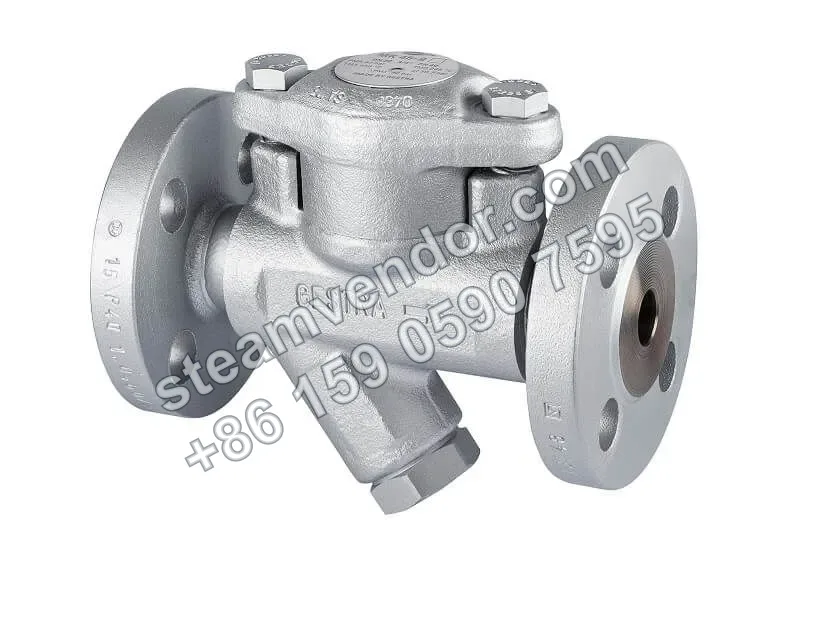
Gestra MK45 is a thermostatic bimetallic steam trap equipped with a corrosion-resistant Hastelloy® diaphragm regulator. The product features a steel body with an integrated Y-strainer and check-valve function, and is available with flanged, threaded, and welded connections. The maximum allowable differential pressure is up to 32 bar. MK45-1 and MK45-2 feature a series double-seated design and a single-seat design, respectively, to accommodate different condensate flow requirements. The trap is suitable for condensate drainage from steam lines and low-flow steam equipment.
Product image of the Gestra MK45 bimetallic steam trap with double flanges
1 / 1
MK45 Bimetallic Steam Trap | Gestra
Thermostatic bimetallic steam trap with integrated Y-type strainer and check valve, DN15-DN25.
Genuine product assurance
We can help verify product data and purchasing details.
Model confirmation
Confirm model, connection and key options before ordering.
After-sales support
After-sales communication support is provided according to the order agreement.
Specifications
- Steam trap type
- Thermostatic steam trap with a corrosion-resistant diaphragm regulator
- Service medium
- Steam and condensate
- Connection sizes
- DN15, DN20, DN25 (½″, ¾″, 1″)
- Connection types
- Flanged, G-thread socket, NPT-thread socket, socket-weld ends, butt-weld ends with transition-piece connection
- Flange standards
- EN 1092-1 PN 40; ASME B16.5 Class 150 RF, Class 300 RF
- Thread standards
- G thread ISO 228-1; NPT thread ASME B16.11
- Weld-end standards
- Socket-weld ends DIN EN 12760 or ASME B16.11 Class 3000; butt-weld ends EN 12627/ISO 9692-1 Code 1.3 or ASME B16.25/ASME B36.10
- Maximum allowable differential pressure
- PN 40 flanges, Class 300 flanges, and welded/threaded ends: 32 bar (465 psi); Class 150 flanges: 19.6 bar (284 psi)
- Pressure-temperature ratings
- PN 40 flanges: 40 barg (-10/20°C) to 13.1 barg (450°C); Class 150 flanges: 19.6 barg (-29/38°C) to 5.5 barg (425°C); Class 300 flanges and welded/threaded ends: 51.1 barg (-10/38°C) to 28.8 barg (425°C)
- Allowable operating temperature
- Saturated steam temperature
- Superheated steam limitation
- The control diaphragm element must not be exposed to superheated steam conditions with a superheat exceeding 5°C
- Condensate discharge subcooling
- Standard element N: approximately 10 K; special element U: approximately 30 K; special element H: approximately 5 K below the boiling temperature
- Seat design
- MK 45-1 features series-mounted seats with double sealing and is suitable for lower condensate flow rates; MK 45-2 features a single seat and is suitable for higher condensate flow rates
- Straining and check-valve functions
- Integrated Y-strainer and check-valve function
- Body material
- Steel EN 1.0460 (ASME A105)
- Sealing material
- Graphite/CrNi
- Diaphragm regulator material
- Hastelloy®
- Pressure Equipment Directive
- PED-compliant, suitable for Group 2 fluids
- Inspection documents
- Material test certificates, internal inspection documents, and test reports in accordance with EN 10204 are available upon request
Application scenarios
Condensate drainage in steam systems
For condensate drainage in steam systems or steam lines, available in DN15, DN20, and DN25 sizes and subject to the specified pressure, temperature, and superheated steam limitations.
Steam trapping for low-flow steam equipment and lines
For steam trapping in steam equipment or small-bore lines with low condensate flow rates. MK45-1 features a series-mounted seat with double sealing and is suitable for lower condensate flow conditions.
Installation & maintenance notes
Operating pressure and temperature limits
Verify that the system pressure and temperature during operation are within the permitted range for the applicable connection rating and comply with the limitations for superheated steam service.
FAQ
How does the MK45 bimetallic steam trap work?
The MK45 is a thermostatic steam trap with a thermostatic element. Its bimetallic construction detects the temperature difference between steam and condensate, automatically discharging condensate below boiling point to help reduce steam loss and prevent superheated steam from entering the system.
What connection types are available for this series, and how should they be selected?
Available options include DIN/ANSI flanges, threaded connections, NPT threads, socket-weld ends and butt-weld ends. Selection should be based on the applicable flange standard, pipe size and on-site welding conditions.
What materials are available for the MK45, and are there two body configurations?
The body and cover materials for MK45/ MK45A are EN 1.0460, or corresponding versions such as EN 1.4404/ASME. Refer to the selection table for the specific model. Tandem-seat and single-seat sealing configurations are available for different condensate flow conditions.
How can I determine whether this steam trap is suitable for my operating conditions?
Evaluate condensate flow rate, operating temperature and pressure, and the saturation temperature range of the steam medium. If the operating temperature may exceed 300°C, consider the risk of intergranular corrosion and comply with the applicable operating limits.
What should be considered when installing and maintaining the MK45?
Keep the control diaphragm element within its permitted operating temperature range and avoid exposure to uncontrolled superheated steam above 5°C. Follow installation requirements for the end connections and requirements for associated strainers and check devices, and inspect seals and valve components regularly.