

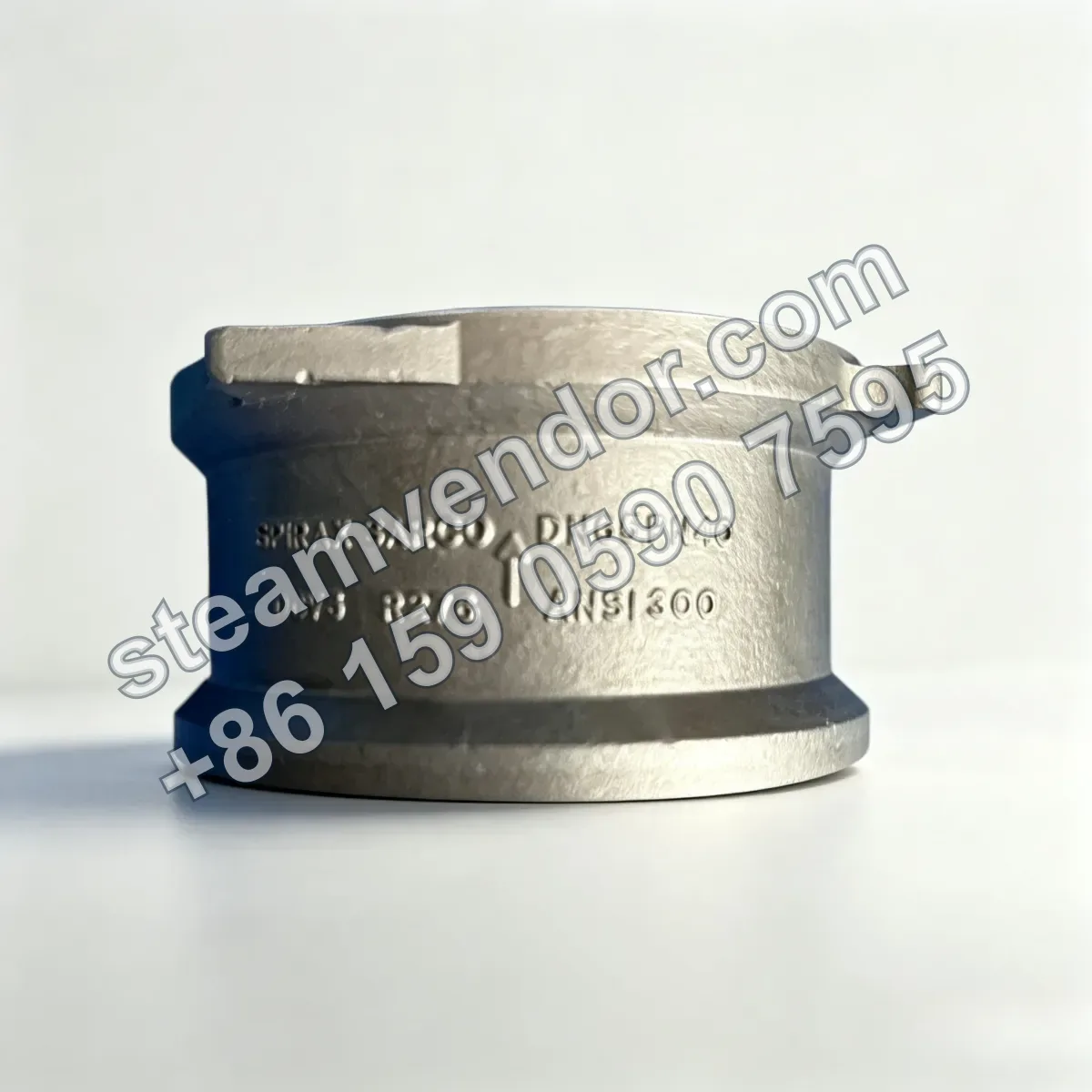
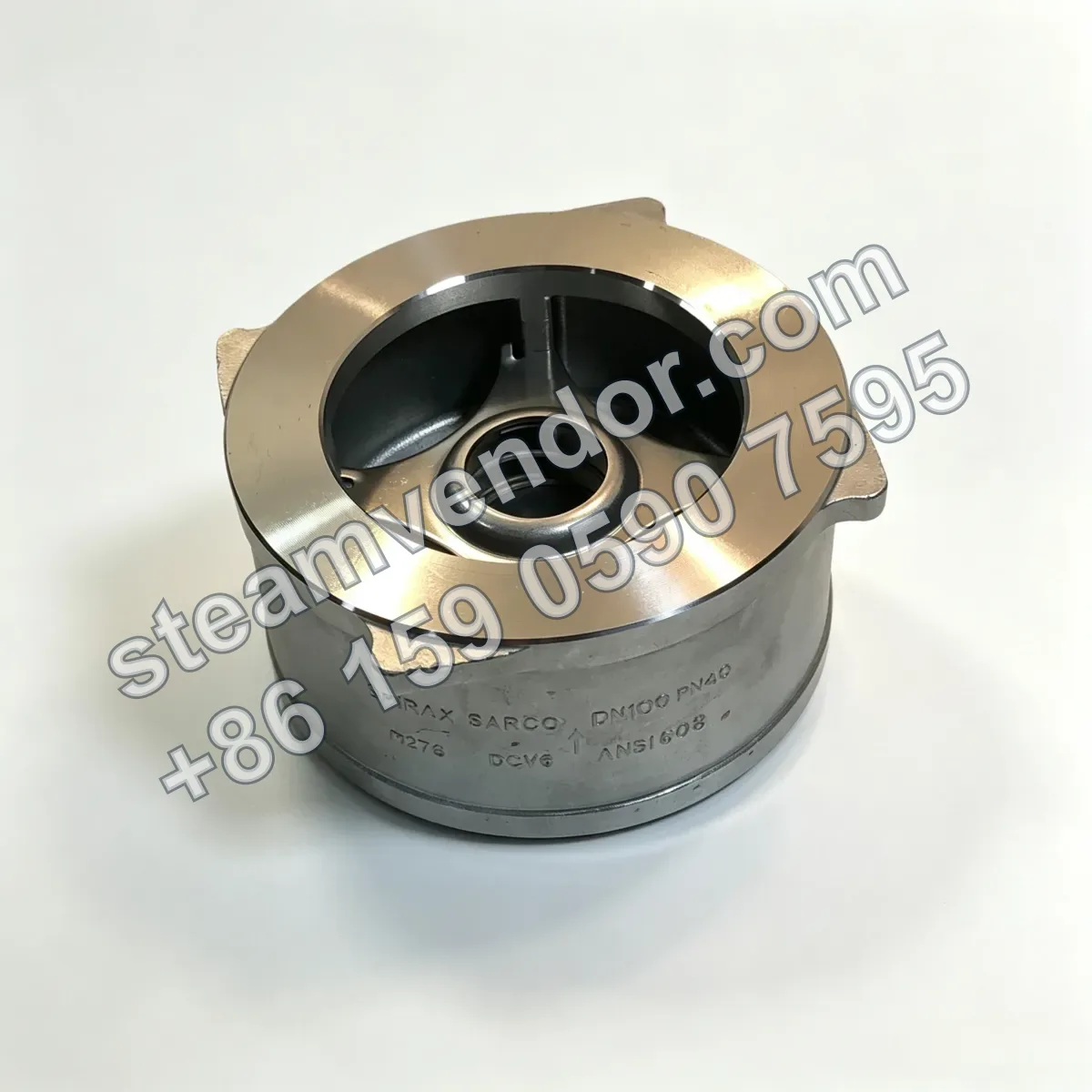
Spirax Sarco DCV6 is a stainless steel wafer-pattern disc check valve for DN15-DN100 flanged pipelines, with a body design rating of PN40/ASME Class 300. The body is made of austenitic stainless steel and is available with metal, Viton, and EPDM sealing options, along with multiple spring configurations. It can be used in steam distribution, condensate recovery, hot water circulation, and process fluid pipelines to prevent reverse flow.
DCV6 Product Photo 1
1 / 2
Spirax Sarco DCV6 Stainless Steel Wafer-Pattern Disc Check Valve
Stainless steel wafer-pattern disc check valve for steam, condensate, and hot water systems, with optional soft-seated configurations.
Genuine product assurance
We can help verify product data and purchasing details.
Model confirmation
Confirm model, connection and key options before ordering.
After-sales support
After-sales communication support is provided according to the order agreement.
Specifications
- Installation method
- Wafer-pattern installation
- Nominal bore
- DN15, DN20, DN25, DN32, DN40, DN50, DN65, DN80, DN100
- Applicable flange standards
- BS 4504/(DIN) PN10, PN16, PN25, PN40; JIS/KS 10K, 16K, 20K, 30K, 40K; ANSI B16.5 Class 150, Class 300; DN80 and DN100 are not suitable for JIS 10K
- Face-to-face dimension standard
- EN 558 Part 2, Series 52
- Body design rating
- PN40 / ASME Class 300
- Maximum allowable pressure
- 40 bar g @ 50°C
- Maximum allowable temperature
- 400°C @ 22.4 bar g
- Maximum operating pressure
- Saturated steam: 40 bar g @ 50°C
- Maximum operating temperature
- Standard and high-load springs: 300°C @ 24.8 bar g; high-temperature spring and springless configurations: 400°C @ 22.4 bar g
- Minimum operating temperature
- -10°C
- Maximum cold hydraulic test pressure
- 76 bar g
- Body material
- Austenitic stainless steel, WS 1.4581
- Disc material
- Austenitic stainless steel, ASTM A276 316
- Seal material options
- Metal disc, fluorocarbon rubber (Viton) soft seat, EPDM soft seat
- Soft-seat temperature range
- Viton: -10°C to 250°C; EPDM: -10°C to 150°C
- Applicable fluids
- Viton soft seat for oil, gas, and steam; EPDM soft seat for water systems
- Spring configurations
- Standard spring, high-load spring, high-temperature spring, and springless; the high-load spring has an opening differential pressure of approximately 700 mbar and is limited to DN65 and below
- Opening differential pressure
- Standard and high-temperature springs: 22.5-26.5 mbar for horizontal flow, 25-33 mbar for upward flow, and 20 mbar for downward flow; springless configuration: 2.5-6.5 mbar for upward flow
- Flow coefficient Kv
- DN15: 4.4; DN20: 7.5; DN25: 12; DN32: 17; DN40: 26; DN50: 39; DN65: 58; DN80: 86; DN100: 158
- Design and manufacturing standards
- BS 7438; sealing standard DIN 3230 part3 BO3, with soft-seated valves complying with BN1 and BO1 when differential pressure is present
Application scenarios
Steam distribution pipelines
DCV6 can be installed in the flanged section of a steam pipeline to prevent reverse flow of steam or condensate. Product documentation specifies its suitability for steam pipelines, wafer-pattern installation, and operation under corresponding steam temperature and pressure conditions according to the selected configuration.
Condensate recovery networks
DCV6 can be used in condensate pipelines and installed in flanged pipe sections to prevent condensate backflow and maintain one-way flow. Product documentation identifies condensate pipelines as an applicable service and supports wafer-pattern installation.
Hot water circulation systems
DCV6 can be used in hot water system pipelines to prevent backflow and maintain one-way flow. With an EPDM soft seat, product documentation specifies suitability for water systems, with a soft-seat operating temperature range of -10°C to 150°C.
Industrial process fluid pipelines
DCV6 can be used in process pipelines to prevent reverse flow. Product documentation specifies broad applicability to process pipelines; with a Viton soft seat, it can be used with oil, gas, and steam.
Selection points
Wafer-Type Compatibility with Multiple Flange Standards
Wafer-type installation for DN15 to DN100 sizes, compatible with DIN/BS PN, JIS/KS, and ANSI Class flange standards. DN80 and DN100 are not suitable for JIS 10K.
Seat and Spring Options for Different Media and Operating Conditions
Available with a metal disc, Viton soft seat, or EPDM soft seat, as well as standard, heavy-duty, high-temperature, and springless configurations. Viton soft seats are suitable for oil, gas, and steam; EPDM soft seats are suitable for water systems.
Heavy-Duty Spring Configuration for Boiler Feedwater up to DN65
Heavy-duty springs are available for sizes up to DN65, with an opening differential pressure of approximately 700 mbar, for boiler feedwater applications.
Installation & maintenance notes
DN80 and DN100 Must Not Be Used with JIS 10K Flanges
The DN80 and DN100 sizes of DCV6 are not suitable for JIS 10K flange systems. Confirm that the valve size matches the flange standard before installation.
FAQ
How does the DCV6 disc check valve work?
The DCV6 uses a disc check mechanism. Fluid pressure opens the disc, and when flow stops or reverse flow begins, the disc closes automatically under spring force to prevent backflow.
What operating conditions are suitable for the DCV6?
The DCV6 can be used in process pipelines, hot water systems, and steam and condensate pipelines. Wafer-pattern check valves are not suitable for severe pulsating conditions, such as applications near compressors.
Which connection conditions should be confirmed when selecting the DCV6?
First confirm that the nominal bore and flange standard are compatible. The DCV6 is available from DN15 to DN100 and is suitable for BS 4504/(DIN) PN10, 16, 25, and 40; JIS/KS 10K, 16K, 20K, 30K, and 40K; and ANSI B16.5 Class 150 and Class 300 connection conditions.
What spring and soft-seat options are available for the DCV6, and how should they be selected?
The DCV6 is available with high-load springs, high-temperature springs, and Viton or EPDM soft seats. Selection should generally be based on the fluid, temperature, and opening differential pressure requirements. For example, a high-load spring may be considered for boiler feedwater, a Viton soft seat for oil, gas, and steam applications, and an EPDM soft seat for water systems. The specific configuration must be confirmed according to the actual model and application conditions.
What should be considered during DCV6 installation and maintenance?
Install the valve in accordance with the flow-direction arrow on the body. Spring-loaded valves can be installed in any orientation. For springless versions installed in vertical pipelines, flow must be from bottom to top. The valve has no spare parts. The installation location should avoid severe pulsating conditions, and maintenance and installation details should be carried out in accordance with the installation and maintenance guide supplied with the product.