

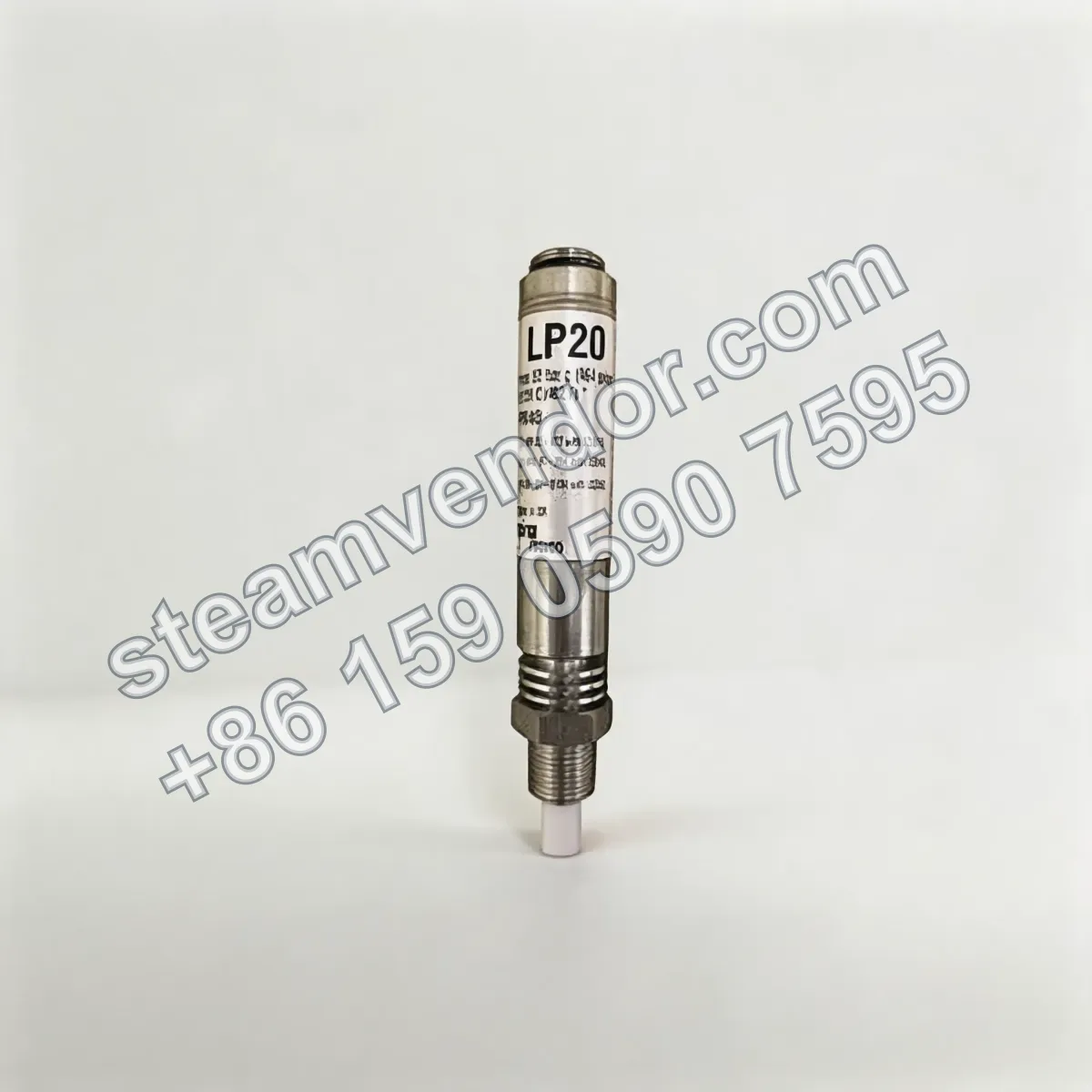
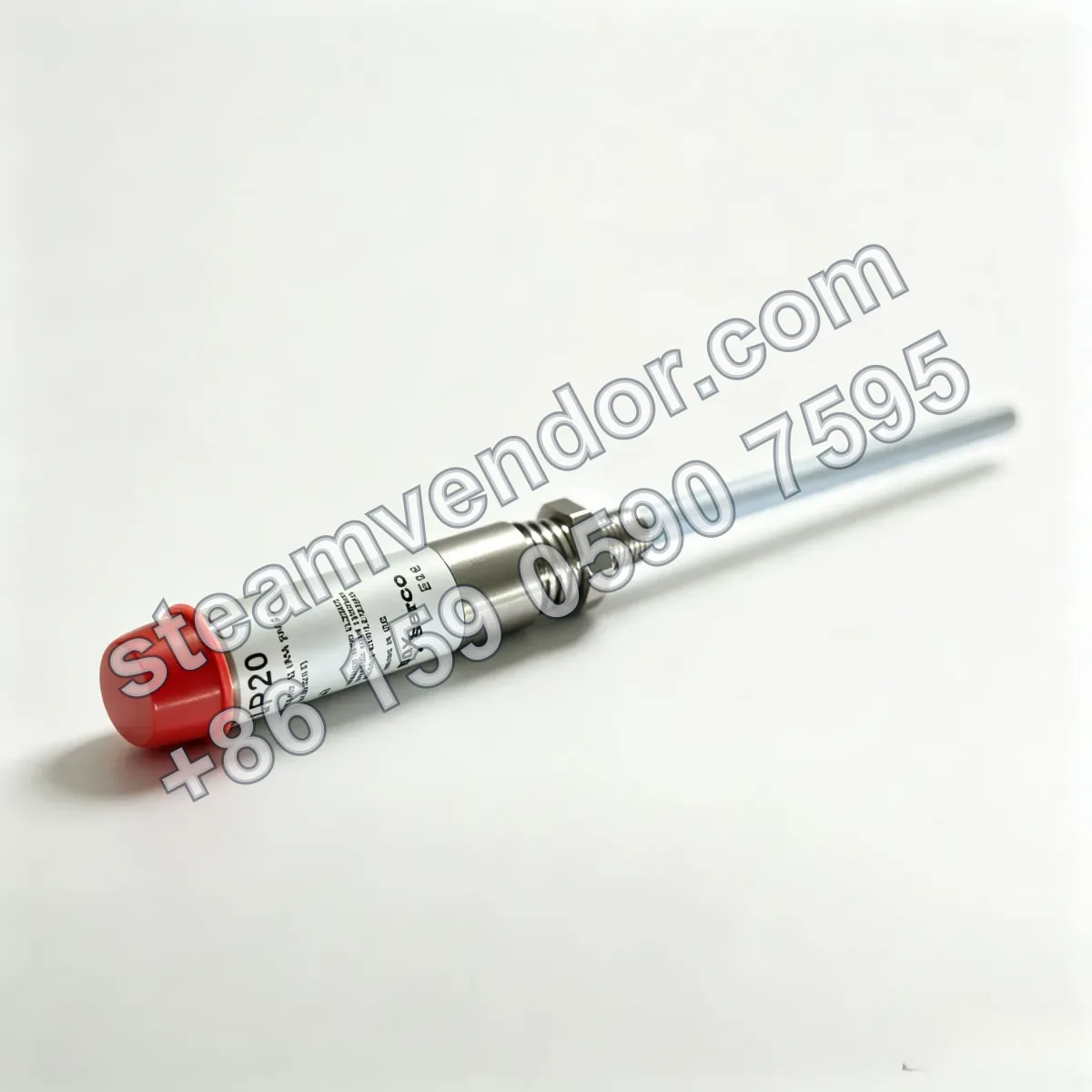
The Spirax Sarco LP20 is a capacitive continuous level sensor designed specifically for conductive liquids. The product uses austenitic stainless steel and PTFE wetted materials, with a pressure rating of PN40, and can operate stably in industrial environments up to 239 °C, supporting continuous level detection and adjustable on/off control. It is installed via a 1/2 BSP threaded connection and requires a PA20 preamplifier for use, suitable for continuous monitoring, control, and alarming of conductive liquid levels in steam boilers and metal water tanks.
LP20 product photo
1 / 2
Spirax Sarco LP20 Capacitive Conductive Liquid Continuous Level Sensor
Capacitive level sensor for continuous detection of conductive liquids in boilers and metal water tanks, used with PA20 preamplifier.
Genuine product assurance
We can help verify product data and purchasing details.
Model confirmation
Confirm model, connection and key options before ordering.
After-sales support
After-sales communication support is provided according to the order agreement.
Specifications
- Level detection method
- Capacitive continuous level detection
- Applicable medium
- Conductive liquid
- Control method
- Continuous level detection; adjustable on/off control
- Compatible preamplifier
- PA20 (supplied separately)
- Pressure rating
- PN40
- Maximum working pressure
- 32 bar g
- Maximum working temperature
- 239 °C
- Ambient temperature range
- 5 °C to 70 °C
- Design cold hydrostatic test pressure
- 60 bar g
- Minimum medium conductivity
- 5 μS/cm or 5 ppm
- Installation connection
- 1/2 BSP internal thread
- Probe length
- 370, 470, 550, 600, 650, 750, 800, 900, 950, 1050, 1200, 1350, 1500 mm
- Sensing depth
- Sensor length minus 25 mm
- Wetted material
- Austenitic stainless steel/PTFE
- Probe coating material
- PTFE
Application scenarios
Continuous monitoring, control, and alarming of conductive liquid levels in steam boilers
The LP20 can be installed in a steam boiler to perform continuous level detection of conductive liquid inside the boiler, and is connected to a PA20 preamplifier and controller or transmitter for level control, adjustable on/off control, and level alarming. The sensor forms a ground loop with the metal boiler through the 1/2 BSP threaded connection.
Level monitoring and control of conductive liquids in metal water tanks
The LP20 can be installed in a metal water tank to perform continuous level detection or adjustable on/off control of conductive liquid inside the tank, and can be connected to a controller, transmitter, or management system to achieve level control and alarming. The sensor forms a ground loop with the metal water tank through the 1/2 BSP threaded installation connection.
FAQ
What medium is the LP20 capacitive level sensor suitable for detecting?
The LP20 is used for continuous level detection of conductive liquids, and can also be used for adjustable on/off level control. The minimum medium conductivity is 5 μS/cm or 5 ppm.
How is the LP20 used in a level control system?
The LP20 must be connected to a separately supplied PA20 preamplifier, and can be connected to one or more controllers or transmitters to achieve level control, level alarming, or signal output to a management system.
What are the requirements for installing the LP20 on a boiler or water tank?
The sensor is installed via a 1/2 BSP internal thread connection. When installed on a steam boiler or metal water tank, it can form a ground loop; when installed on non-conductive water tanks such as plastic or concrete, a separate ground terminal must be provided.
How are the probe length and sensing depth of the LP20 determined?
The LP20 is available in probe lengths from 370 to 1500 mm. The sensing depth equals the sensor length minus 25 mm, where 25 mm is the head dead zone length; the sensor cannot be cut. The specific configuration must be confirmed according to the actual model and application conditions.
What should be noted during installation and maintenance of the LP20?
When installed on a boiler shell or a water tank with flow or turbulence, a protection tube as long as possible should be provided, with space reserved for high-temperature expansion. Vent and drain holes must not be covered; without protective measures, it should not be installed outdoors. The sensor requires no special maintenance, but the boiler water level control and alarm system should be inspected and tested periodically.