

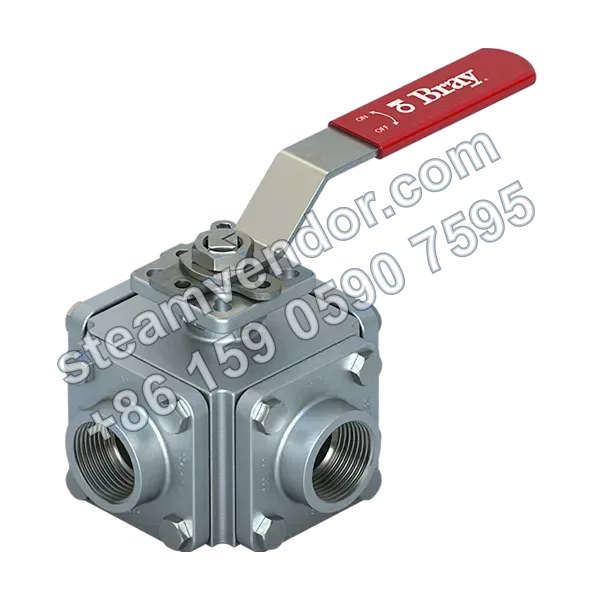
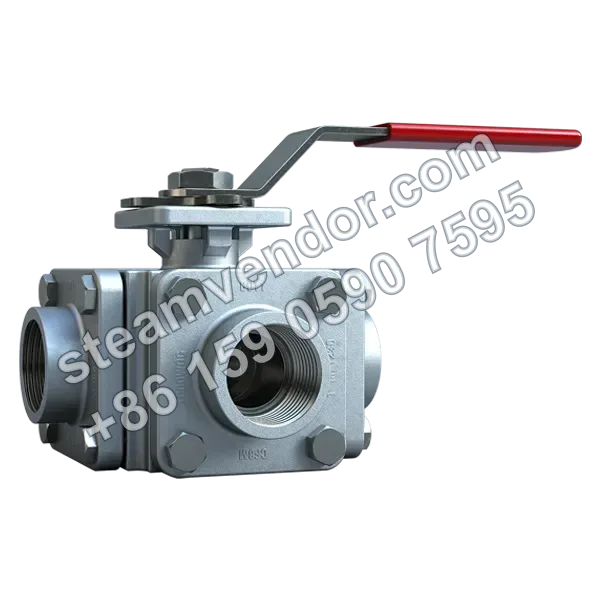
Bray MPT/MPC Series three-way/four-way multi-port ball valves feature a full-port design and are available with stainless steel, carbon steel, and alloy valve bodies. Suitable for -31°C to 232°C service, ASME Class 150/300, or 1000 psi CWP. The valves provide zero-leakage sealing, a blowout-proof stem, and multiple connection options for filter, flow meter, and heat exchanger bypass switching, as well as process media mixing and storage tank inlet/outlet line switching.
MPT/MPC Series Multi-Port Ball Valve
1 / 2
Bray MPT/MPC Series Three-Way/Four-Way Multi-Port Ball Valves
Three-way/four-way multi-port ball valves supporting filter bypass switching and multiple connection options.
Genuine product assurance
We can help verify product data and purchasing details.
Model confirmation
Confirm model, connection and key options before ordering.
After-sales support
After-sales communication support is provided according to the order agreement.
Specifications
- Size Range
- ¼ - 12" (8 - 300mm)
- Body Materials
- Stainless steel, carbon steel, alloy
- Operating Temperature Range
- -20°F to 450°F (-31°C to 232°C)
- Maximum Allowable Operating Pressure
- ASME Class 150, 300 (PN10 to PN40), 1000psi CWP (69 bar)
- Seat Materials
- Standard TFM 1600; optional Tek-Fil®, UHMWPE, RPTFE, PTFE
- Leakage Class
- Zero leakage
- Number of Body Passages
- 3-way and 4-way
- End Connections
- Threaded, clamp, socket weld, butt weld, ASME B16.5 flanged connections
- Port Configuration
- Full port
- Vacuum Rating
- 29" Hg
- Design Standard
- ASME B16.34
- Stem Design
- Blowout-proof
Application scenarios
Filter Bypass Switching
Used to switch the flow path between the filter inlet and outlet and the bypass branch, allowing the medium to pass through or bypass the filter while enabling multidirectional control and shutoff within the same valve.
Meter Bypass Switching
Used to switch the flow path between the pipelines upstream and downstream of the meter and the bypass pipeline, allowing the medium to pass through or bypass the meter while enabling multidirectional flow routing and shutoff within the same valve.
Heat Exchanger Bypass Switching
Used to switch the flow path between the heat exchanger inlet and outlet and the bypass pipeline, allowing the medium to pass through or bypass the heat exchanger while enabling multidirectional control and shutoff within the same valve.
Process Pipeline Medium Mixing or Blending
Used for mixing or blending media from two or more process pipelines. Three-way or four-way flow passages organize multidirectional flow paths while enabling control and shutoff of the relevant flow paths within the same valve.
Storage Tank Inlet and Outlet Pipeline Switching
Used to switch pipelines for the direct inflow or outflow of media to or from a storage tank. A three-way or four-way configuration organizes multidirectional media flow through the tank connection pipelines and provides shutoff for the relevant flow paths.
Selection points
Integrated Multiport Control and Shutoff Functions
This series provides 3-way or 4-way multi-directional flow control and shutoff functions in a single valve. It can be used for mixing, diverting, and bypass switching of multiple media streams, reducing the need for additional valves.
Optional Seat Materials
TFM 1600 seats are standard, with Tek-Fil, UHMWPE, RPTFE, and PTFE materials also available. Seat material can be selected according to the media and operating conditions.
Multiple End Connection Options
The product is available with threaded, clamp, socket weld, butt weld, and ASME B16.5 flanged connections. Connection types can be selected based on piping interfaces and installation requirements.
Full-Port Multiport Flow Paths
This series features full-port passages and is available in 3-way and 4-way valve body configurations. The configuration should be determined according to the required flow directions and number of valve body passages.
29 inHg Vacuum Service Capability
Product documentation explicitly supports vacuum applications up to 29 inHg. Confirm that the actual vacuum operating conditions do not exceed this application limit during selection.
Installation & maintenance notes
Confirm Multiport Orientation and Flow Path Configuration
Before installation, confirm that the port layout of the MPT/MPC series 3-way or 4-way ball valve matches the on-site piping function, ensuring that media diversion, mixing, or bypass functions meet the design requirements.
FAQ
How does the MPT/MPC Series multi-port ball valve work?
The multi-port ball valve provides 3-way or 4-way flow control and shutoff within a single valve. Media can be diverted between different ports or routed around components such as filters, meters, and heat exchangers, enabling multi-path switching with one valve.
What are the key technical advantages of this valve series?
Features include 3-way/4-way configurations, a blowout-proof stem, zero-leakage sealing, full-port design, optional seat materials, and multiple connection options. The valves comply with the ASME B16.34 standard and undergo the applicable testing, making them suitable for media diversion and mixing applications.
What media flow directions and system configurations are recommended?
The valves can divert media to different locations, bypass filters, meters, and heat exchangers, direct flow into or out of storage tanks, and shut off media from different locations. This facilitates parallel or branched system layouts. The specific configuration should be confirmed based on the actual model and application conditions.
What are the key considerations regarding materials and temperature range for this series?
Body materials include stainless steel, carbon steel, and alloy. The temperature range is -20°F to 450°F (-31°C to 232°C). Standard and optional seat materials are available; the specific material selection should be determined based on the model and media.
What key factors should be considered during valve selection?
Priority considerations include the number of ports (3-way/4-way), size range (¼–12''/8–300mm), maximum operating pressure, body and seat materials, leakage class, end connection type, and whether a blowout-proof stem design is required for safety.