

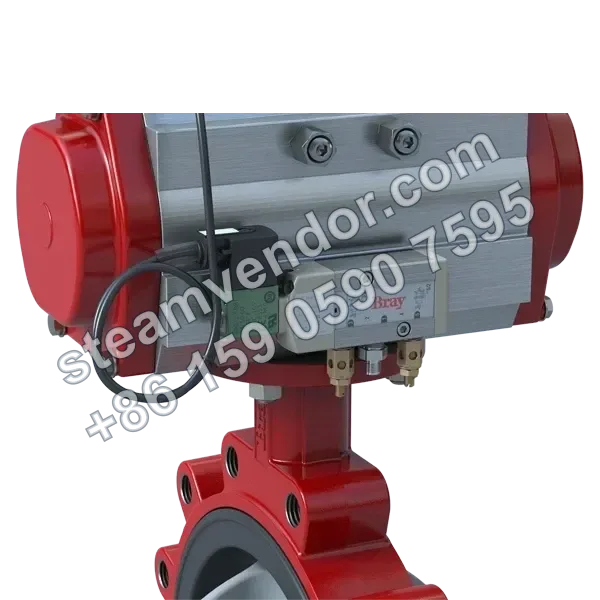
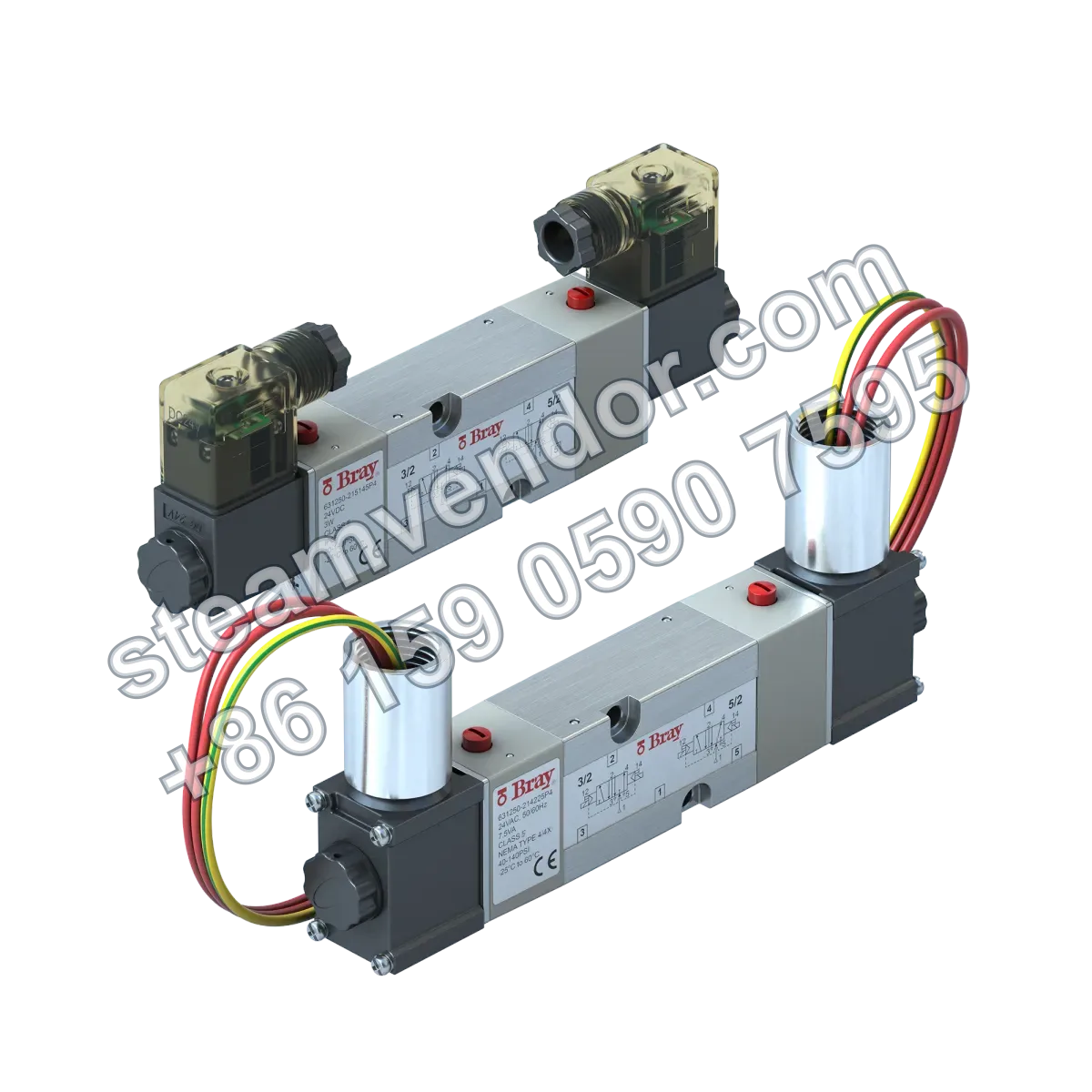
The Bray Series 63 NAMUR pneumatic actuator solenoid valve features NAMUR direct mounting and a VDI/VDE 3845 interface, compatible with Bray Series 92/93 pneumatic actuators. It can be converted between 3/2-way and 5/2-way functions, with single-coil or double-coil configurations and a rotary locking manual override. Suitable for valve on/off control of double-acting or spring-return actuators, and for hazardous-area applications meeting Class I Div I requirements.
Series 63 solenoid valve product image
1 / 3
Bray Series 63 NAMUR Pneumatic Actuator Solenoid Valve
NAMUR direct-mount solenoid valve for pneumatic actuator valve open/close control, with optional explosion-proof coil.
Genuine product assurance
We can help verify product data and purchasing details.
Model confirmation
Confirm model, connection and key options before ordering.
After-sales support
After-sales communication support is provided according to the order agreement.
Specifications
- Interface Standard
- NAMUR direct mount, VDI/VDE 3845
- Port Size
- 1/4" NPT
- Operating Pressure
- High flow: minimum 22 psi (1.5 bar), maximum 130 psi (9 bar); UL listed: minimum 30 psi (2 bar), maximum 130 psi (9 bar)
- Operating Temperature Range
- AC: -13°F (-25°C) to +140°F (+60°C); DC: -13°F (-25°C) to +77°F (+25°C)
- Enclosure Rating
- Weatherproof: NEMA 4, 4X
- Explosion-Proof Rating
- Class I Div I
- Coil Configuration
- Single-coil or dual-coil
- Control Function
- 3/2-way convertible to 5/2-way
- Electrical Connection
- NPT and IP65 DIN connections
- Duty Cycle
- Continuous
- Certifications
- CSA, CE, UL (select models only)
- Supply Medium
- Clean, dry gas
- Communication Protocol
- CommPro, S54
- Manual Override
- Rotary locking type
Application scenarios
Valve open/close control for Bray 92/93 double-acting actuators
Installed on Bray 92/93 Series double-acting pneumatic actuators via the NAMUR direct-mount interface, using 5/2-way functionality to control opening and closing of the associated valve.
Loss-of-air actuation control for Bray 92/93 spring-return actuators
Installed on Bray 92/93 Series single-acting pneumatic actuators via the NAMUR direct-mount interface, using 3/2-way functionality to provide actuator open/close control and vent air to the actuator spring side.
Valve open/close control in hazardous areas
Uses explosion-proof coils compliant with Class I Div I standards to provide open/close control for valve assemblies installed on Bray 92/93 Series pneumatic actuators; specific suitability must be confirmed based on the selected model.
Valve automation systems using CommPro or S54
Compatible with CommPro or S54 industrial communication protocol devices, serving as the solenoid control component for Bray 92/93 Series pneumatic actuators to provide pneumatic open/close control of valve assemblies.
Selection points
Convertible 3/2-way and 5/2-way control functions
With interchangeable port configuration plates, this series can be converted between 3/2-way and 5/2-way functions for single-acting and double-acting pneumatic actuators.
3/2-way closed-loop spring-side exhaust protection
In 3/2-way operation, the solenoid valve can use a closed-loop configuration to vent air to the actuator spring side, helping protect the actuator from corrosion.
NAMUR direct-mount interface for 92/93 Series actuators
This series features a NAMUR direct-mount interface compliant with VDI/VDE 3845 and is designed for direct mounting to Bray 92/93 Series pneumatic actuators.
Hazardous-area and weatherproof model options
This series offers explosion-proof coil options compliant with Class I Div I requirements. Weatherproof models are rated NEMA 4 and NEMA 4X.
Installation & maintenance notes
Verify NAMUR mounting interface compatibility with the actuator
This solenoid valve should be installed using NAMUR direct mounting and complies with VDI/VDE 3845 interface requirements for Bray 92/93 Series pneumatic actuators.
Use clean, dry gas supply
The supply medium must be clean, dry gas. Confirm that the site air supply meets this medium requirement before installation.
Check operating pressure and coil configuration requirements
Before installation and commissioning, verify that the site supply pressure is within the applicable operating pressure range of the selected model, and confirm the electrical configuration and applicable temperature conditions of the selected solenoid coil.
Verify explosion-proof model suitability for hazardous areas
When used in hazardous locations, confirm that the selected solenoid valve or coil is configured for the applicable hazardous area. Series 63 offers optional explosion-proof coils compliant with Class I Div I requirements.
Select 3/2-way or 5/2-way configuration according to actuator type
Select the correct 3/2-way or 5/2-way port configuration according to the single-acting or double-acting pneumatic actuator and control requirements.
FAQ
How does the Series 63 solenoid coil work?
The Series 63 solenoid coil is mounted directly on Series 92/93 pneumatic actuators through the NAMUR mounting interface and controls valve opening and closing by energizing and de-energizing the coil.
Which port configurations does the Series 63 coil support for different valve functions?
An interchangeable port configuration plate allows switching between 5/2 (4-way) and 3/2 (3-way) configurations to meet the control requirements of different actuators.
What installation environment ratings and certifications are available for the Series 63 coil?
The coil is UL and CSA certified, all units are CE marked, and explosion-proof options comply with the Class I Div I standard for general-purpose and hazardous-area applications.
What power supply types and temperature ranges are available for the Series 63 coil?
Multiple AC and DC supply voltage options are available. The operating temperature ranges differ between AC and DC versions; refer to the specific model configuration.
How do I determine whether it is suitable for my actuator and medium during selection?
Confirm that the actuator is a Series 92/93 unit, the medium is clean, dry gas, and the operating pressure range and power supply type are within the permitted range of the selected model. Specific configurations must be confirmed according to the actual model and application conditions.
Documents
Product Brochure - Series 92/93 Pneumatic Actuators and AccessoriesProduct information · EnglishProduct Brochure - Valve Automation Center (VAC)Product information · EnglishIOM Manual - Series 63 N4 OM ManualManual · EnglishIOM Manual - Series 63 High-Flow Solenoid ValveManual · EnglishIOM Manual - Series 63 N4/N7Manual · EnglishTechnical Sales Manual - Series 63 Solenoid ValveManual · EnglishSales Data Sheet - Hazardous Location Control DevicesProduct information · EnglishRecommended Specification - Series 63 Solenoid ValveProduct information · English