

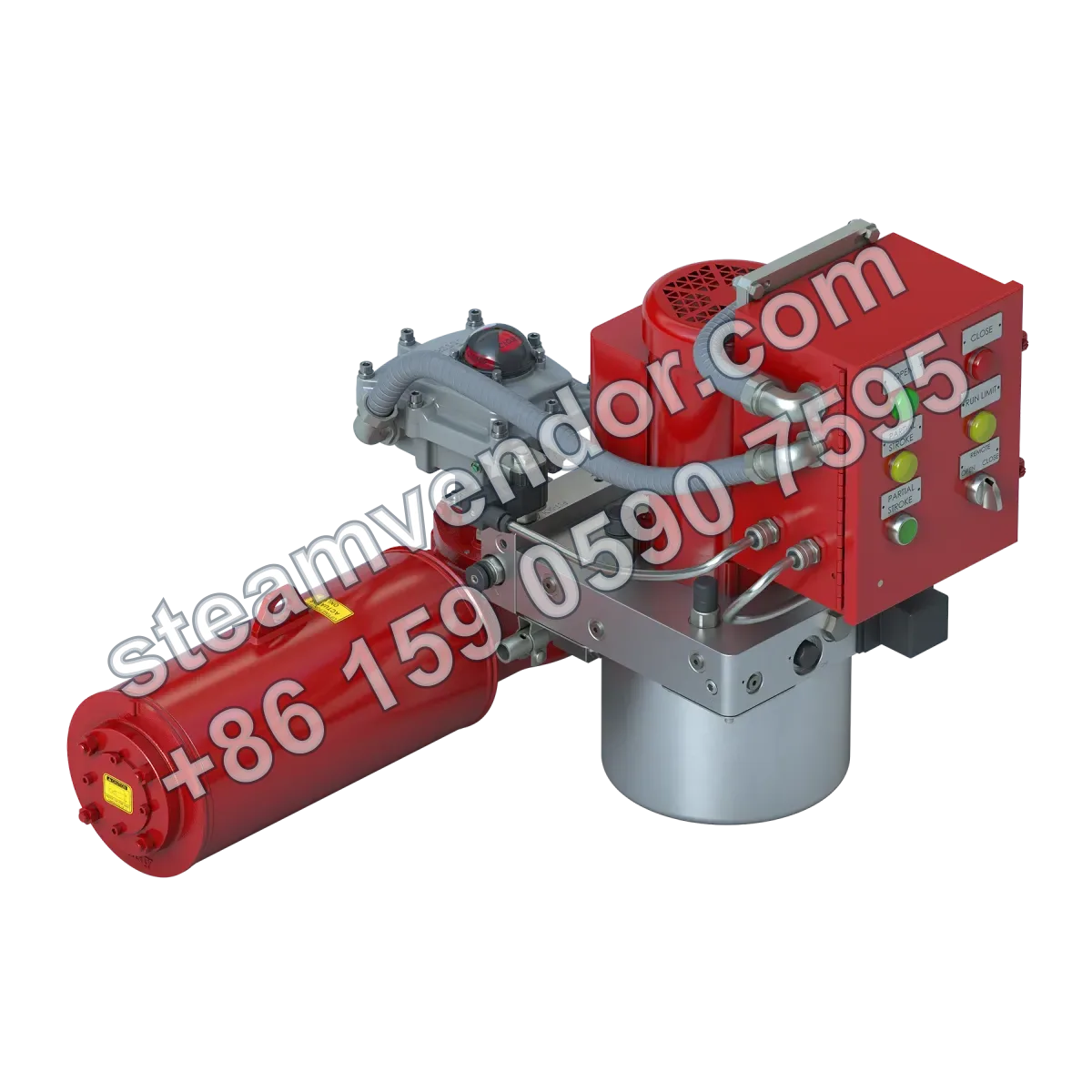
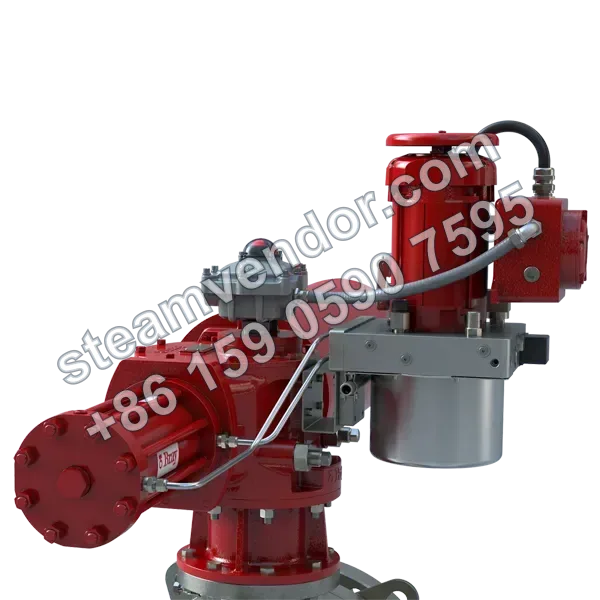
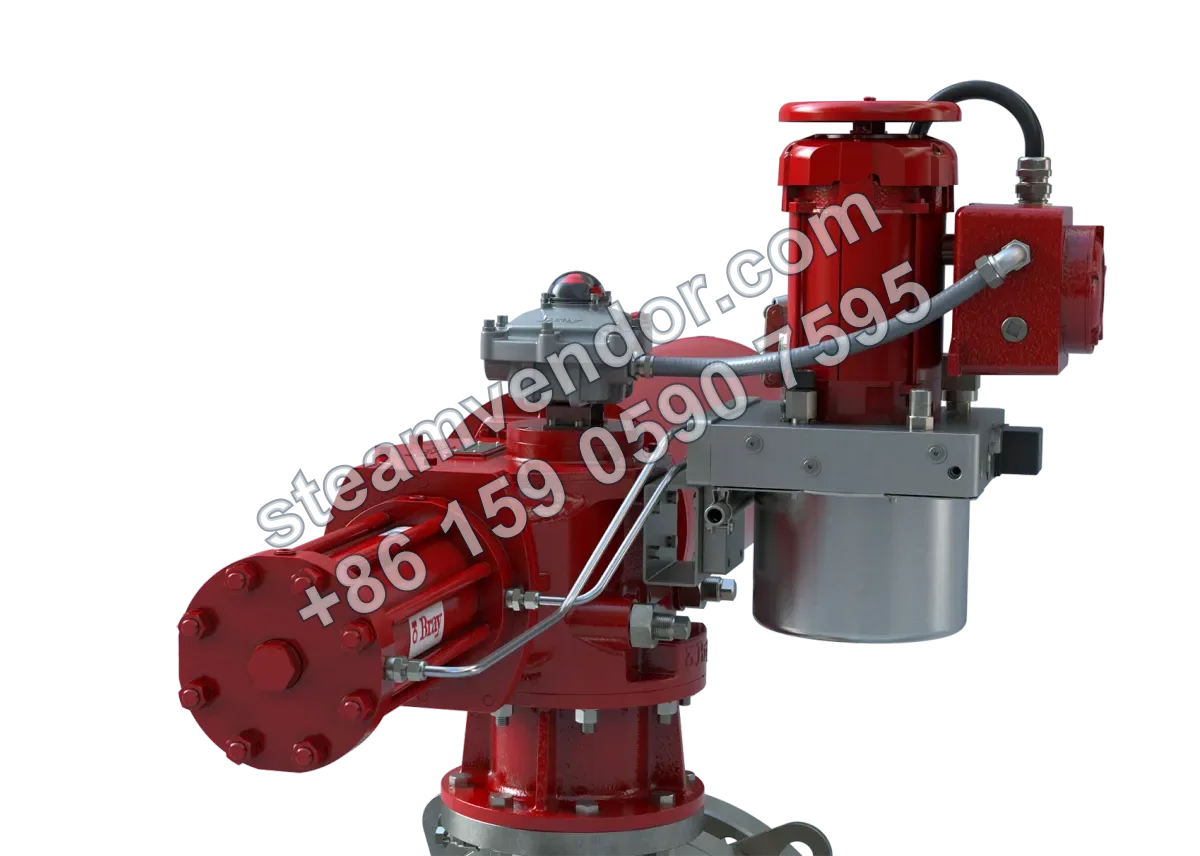
Bray Series 98EH zero-emission electro-hydraulic actuators are compatible with rotary, linear, multi-turn, and damper valves for on/off and modulating control. Output torque ranges from 132 to 97,515 Nm, with double-acting or spring-return configurations and optional fail-lock, fail-return, fail-open, or fail-close functions. Suitable for valve automation applications requiring remote or local diagnostics, partial-stroke testing, and explosion-proof and weatherproof protection.
98EH Series Electro-Hydraulic Actuator Product Image
1 / 3
Bray 98EH Series Zero-Emission Electro-Hydraulic Actuator
Zero-emission electro-hydraulic actuator with fail-safe capability and remote diagnostics
Genuine product assurance
We can help verify product data and purchasing details.
Model confirmation
Confirm model, connection and key options before ordering.
After-sales support
After-sales communication support is provided according to the order agreement.
Specifications
- Output Torque
- 1,177 to 863,089 in-lb (132 to 97,515 Nm)
- Operating Temperature Range
- -50°F to 212°F (-46°C to 100°C)
- Maximum Allowable Operating Pressure
- 150 to 3000 psi (10 to 207 bar)
- Power Requirements
- 12, 24, or 48 VDC, 120 or 220 VAC, 480V 3-phase, 50 to 60 Hz, solar- or wind-charged power packs
- Control Signal Type
- 4 to 20 mA, 0 to 10 VDC, network protocols
- Mounting Interface Standards
- ISO 5211:2001(E), MSS SP-101-1989
- Test Standard
- EN 15714-4:2009
- Safety Certifications
- UL, FM, CSA, ATEX
- Compatible Valve Types
- Rotary, linear, multi-turn, damper valves
- Duty Type
- On/off, modulating
- Actuation Type
- Double-acting, spring return
- Fail-Safe Modes
- Spring or stored-energy accumulator for fail-lock, fail-return, fail-open, or fail-close operation
- SIL Capability
- Supported
- Protection Rating
- Weatherproof, explosion-proof
- Partial Stroke Testing
- Supported
- Diagnostic Capability
- Remote and local diagnostics
- Manual Override
- Manual override during power loss
Selection points
Zero-Emission Self-Contained Electro-Hydraulic Actuation
Uses a self-contained closed-loop hydraulic power unit combined with electric power. It does not rely on compressed air or natural gas and produces no exhaust emissions during operation, making it suitable for industrial valve automation applications requiring reduced dependence on pneumatic supplies or controlled site emissions.
Modular Power Configuration and Remote-Mounting Capability
The hydraulic power unit can be mounted directly on the actuator body or remotely on a separate ground-mounted stand. It can power hydraulic cylinders for one or multiple valves, making it suitable for valve applications with limited installation space or complex site layouts.
Wide-Range High-Torque Output
Provides an output torque range of 132 to 97515 Nm. Hydraulic actuation delivers high torque output for industrial applications with demanding valve drive-force requirements.
Configurable Fail-Safe and Safety Control Functions
Supports spring or stored-energy accumulator configurations for fail-lock, fail-return, fail-open, or fail-close operation, as well as ESD and partial stroke testing. Suitable for valve control applications requiring defined fail-safe actions.
Multiple Power Supply Options
Supports DC, AC, three-phase power, and solar- or wind-charged power packs. The power source can be selected according to site power conditions, making it suitable for remote valve stations with limited electrical infrastructure.
Compatibility with Multiple Valve Types
Compatible with rotary, linear, multi-turn, and damper valves, with actuator configurations available according to valve type.
Installation & maintenance notes
Valve Interface and Mounting Compatibility
Before installation, confirm that the actuator matches the type and mechanical mounting interface of the driven valve. The mounting interface shall comply with ISO 5211:2001(E) or MSS SP-101-1989.
Site Temperature and Protection Certification Suitability
Confirm that the installation ambient temperature is within the operating range of -46°C to 100°C, and verify that the actuator's weatherproof or explosion-proof construction and certifications meet the requirements of the installation area.
Power Supply and Control Signal Configuration Check
Before wiring and commissioning, confirm that the site power supply and control signals match the actuator configuration. This product can use 12, 24, or 48 VDC, 120 or 220 VAC, or 480V three-phase 50 to 60 Hz power. Control signals can be 4 to 20 mA, 0 to 10 VDC, or network protocols.
Fail-Safe Mode Verification
For double-acting, spring-return, or stored-energy accumulator configurations, confirm before installation and commissioning that the fail-safe mode meets the valve safety-function requirements, including fail-lock, fail-return, fail-open, or fail-close operation.
FAQ
What improvement in valve thrust and torque can be expected after integrating this actuator?
This actuator uses closed-loop hydraulic drive to provide high thrust and torque, along with rapid switching and precise positioning. Specific values must be confirmed based on the actual model and valve type.
What power supply and control options are available for this actuator, and is it suitable for remote field locations?
Multiple control voltage and signal options are available, including DC, AC, and network protocols. It can also be paired with solar- or wind-charged power packs, making it suitable for remote locations with limited power availability.
Can this actuator operate reliably in extreme temperature environments?
The operating temperature range is -50°F to 212°F (-46°C to +100°C), covering process applications from the coldest to the hottest conditions.
What are the key advantages of this series compared with conventional pneumatic or electric actuators?
Hydraulic drive provides zero emissions, rapid switching, high positioning accuracy and repeatability, and fail-safe and return positioning through springs or energy-storage devices, with no exhaust emissions.
How can valve compatibility and actuator selection be confirmed?
This series supports multiple valve types, including rotary, linear, multi-turn, and damper valves. Final selection must be confirmed based on valve model, process media, pressure, and temperature conditions.