

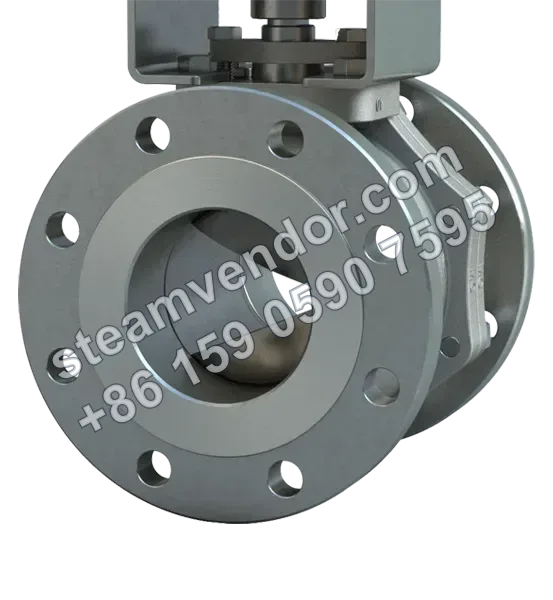
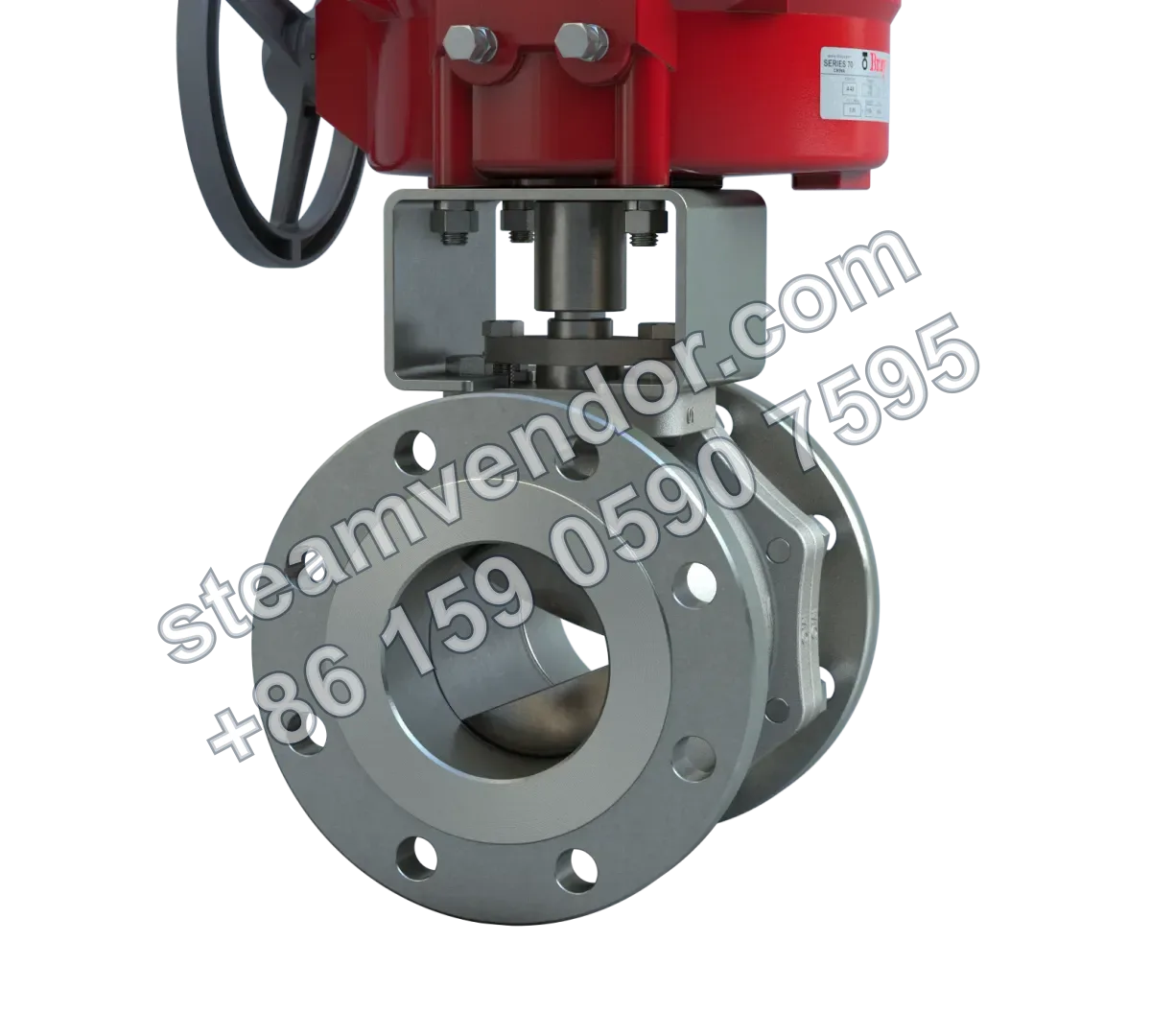
The Bray V-Control V-port control ball valve is designed for continuous modulation of steam, liquid, and other media flow, with 15°, 30°, 60°, 90°, and custom V-port options. Available in CF8M stainless steel or WCB carbon steel, it is suitable for NPS ¼ to 12, -46°C to 343°C, and ASME Class 150 to 600 service conditions. Typical applications include process steam temperature control, level control, and liquid control loops with cavitation risk.
V-Port Control Ball Valve Product Image
1 / 3
Bray V-Control V-Port Control Ball Valve
V-port control ball valve for steam, level, and cavitation control applications
Genuine product assurance
We can help verify product data and purchasing details.
Model confirmation
Confirm model, connection and key options before ordering.
After-sales support
After-sales communication support is provided according to the order agreement.
Specifications
- Nominal Size Range
- NPS ¼ to 12 / DN 6 to 300
- Operating Temperature Range
- -50°F to 650°F (-46°C to 343°C)
- Maximum Allowable Operating Pressure
- ASME Class 150, 300, 600; EN 1092 PN10, 16, 25, 40
- Shutoff Class
- Class VI
- Body Materials
- Stainless steel (CF8M), carbon steel (WCB)
- Seat Materials
- Tek-Fil®, PEEK, RPTFE, TFM, metal
- Ball Materials
- 316, stainless steel (CF8M)
- Stem Materials
- ASTM A479 Type 316, ASTM A564 Type 17-4PH, ASTM A182 F51
- End Connection Types
- Threaded, socket weld, butt weld, flanged
- V-Port Options
- 15°, 30°, 60°, 90°, custom slotted ports, custom V-ports
- Design Standard
- ASME B16.34
- Testing Standards
- API 598, FCI 70-2
- Face-to-Face Dimension Standard
- ASME B16.10
- Certifications and Compliance
- API 607, ATEX, NACE MR0175, PED, PE(S)R, SIL, TR CU
Application scenarios
Process Steam Temperature Control
This V-control ball valve is suitable for steam control and temperature control loops, enabling continuous adjustment of steam flow.
Level Control Loop
This V-control ball valve is suitable for level control service and can be used in process applications where level is controlled by adjusting flow.
Liquid Control Loop with Cavitation
This V-control ball valve is suitable for cavitation service and can be used for liquid flow control applications where cavitation is a potential risk.
Selection points
Multiple V-Port and Custom Port Options
Available with 15°, 30°, 60°, and 90° V-ports, with support for custom slot ports and custom V-ports to meet specific control requirements.
Class VI Shutoff Combined with Flow Control
This V-control ball valve provides Class VI shutoff and precise flow control, combining throttling performance with low-leakage shutoff capability.
Multiple Seat Material Options
Seat materials include Tek-Fil, PEEK, RPTFE, TFM, and metal, allowing configuration based on the specific medium and operating conditions.
Direct Replacement for Selected Bray Quarter-Turn Ball Valves
This product can serve as a direct replacement for multiple Bray quarter-turn ball valves in existing Bray valve applications requiring an upgrade from on/off service to control service.
Multiple End Connection Options
Threaded, socket-weld, butt-weld, and flanged end connections are available to accommodate different piping installation methods.
Compatible with Bray Automated Actuators
Can be combined with Bray pneumatic, electric, and electro-hydraulic actuators and control systems for automated flow control configurations.
Installation & maintenance notes
Match the End Connection to the Actual Valve Configuration
During installation, select the corresponding threaded, socket-weld, butt-weld, or flanged connection method according to the valve's actual end connection type.
Configure Compatible Actuators and Controllers
For automated flow control, the valve should be paired with a compatible actuator and valve controller as a complete control valve solution to achieve precise control.
Verify That Medium Temperature and Pressure Are Within Allowable Limits
Before installation and commissioning, verify that the actual medium temperature and pressure do not exceed the valve's specified temperature range of -46°C to 343°C and corresponding pressure rating.
FAQ
How does a V-port control valve work, and why is it suitable for precision flow control?
The V-port precisely regulates flow passage opening through ball rotation. Combined with zero-leakage shutoff and high rangeability, it delivers smoother flow control, lower pressure drop, and fast response for a wide range of control valve applications.
What are the key selection considerations for this V-port control valve, and how should it be matched with an actuator?
Selection should consider port geometry, size range (Cv value), materials, end connections, and operating temperature/pressure. For optimal automated control, pair the valve with a suitable actuator and control system to create a complete control valve solution.
What standard port angles are available for the V-port, and can they be customized?
Standard ports are available with 30°, 60°, and 90° opening options. Custom port geometries are also available to meet specific control valve application requirements.
What certifications and standards does this V-port control valve meet, and can it be used in tightly regulated environments?
The valve complies with multiple industry standards and certifications, including API 607, ATEX, NACE MR0175, PED, PE(S)R, SIL, and TR CU, making it suitable for applications governed by international standards.
How can material and temperature/pressure limitations be confirmed?
Technical specifications cover stainless steel and carbon steel bodies, multiple seat materials, and shutoff classes, with a broad temperature range and maximum allowable pressure ratings classified according to ASME/EN standards. The specific configuration must be confirmed based on the actual model and application conditions.
Documents
Product Brochure - Rotary Control Valve BrochureProduct information · EnglishProduct Brochure - Ball Valve OverviewProduct information · EnglishProduct Brochure - Advanced V-Port Control Ball ValveProduct information · EnglishSelection Guide - Control Valves Version 2.0Product information · EnglishSelection Guide - V-Control V-Port Valves F15-F30 Part NumbersProduct information · EnglishSelection Guide - V-Control V-Port Valves Triad Part NumbersProduct information · EnglishTechnical Bulletin - Ball Valve Selection Guide: V-ControlProduct information · EnglishTechnical Bulletin - Ball Valve Actuator Selection GuideProduct information · English