

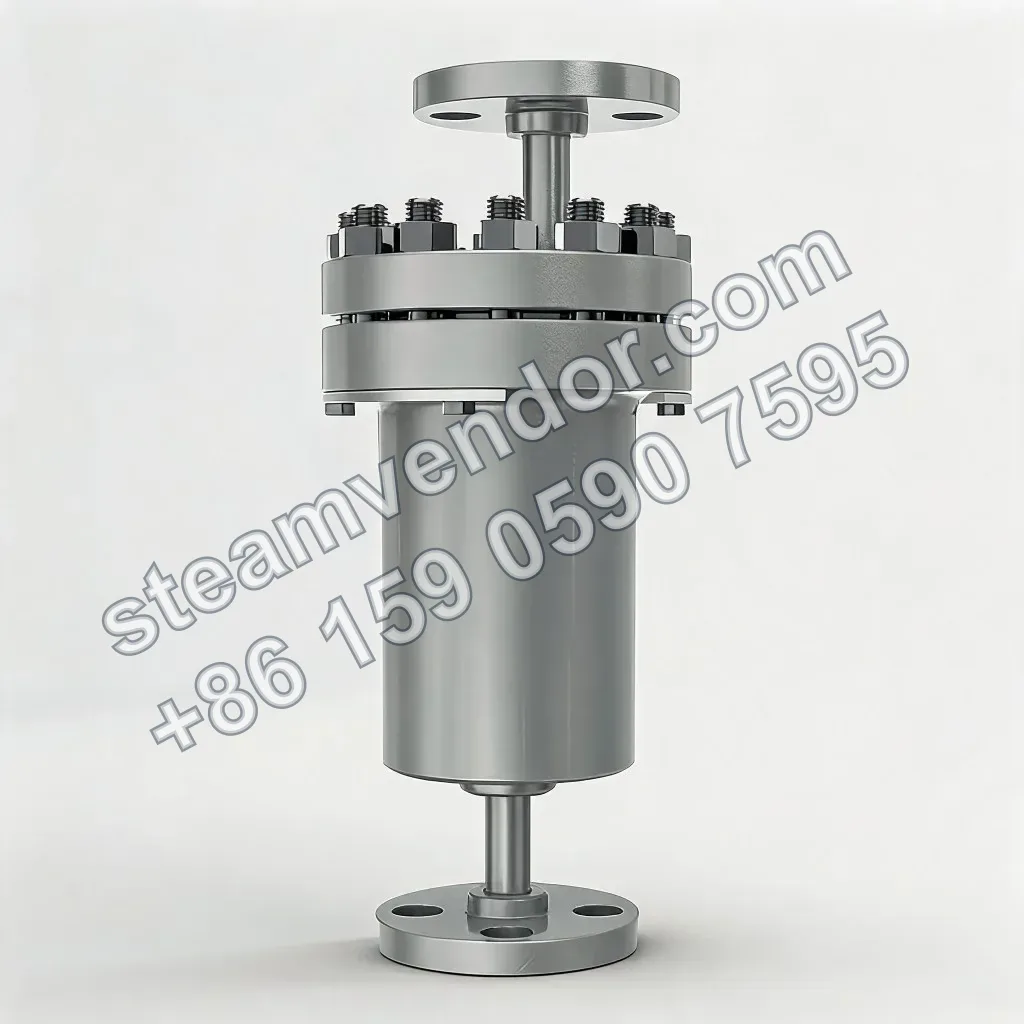
Spirax Sarco C-LF2 is a low-temperature carbon steel inverted bucket steam trap for saturated steam, superheated steam, and steam condensate systems. The body and cover are manufactured from A350 LF2. It has a maximum operating temperature of 345 °C and is available with threaded, socket weld, and flanged connections. Suitable for condensate drainage from high-temperature, high-pressure steam mains, headers, and low-temperature environments.
Product image of Spirax Sarco inverted bucket steam trap C-LF2, double-flanged
1 / 1
C-LF2 Inverted Bucket Steam Trap | Spirax Sarco
Inverted bucket steam trap for condensate discharge from saturated and superheated steam systems, with flanged connections.
Genuine product assurance
We can help verify product data and purchasing details.
Model confirmation
Confirm model, connection and key options before ordering.
After-sales support
After-sales communication support is provided according to the order agreement.
Specifications
- Steam trap type
- Inverted bucket steam trap
- Suitable media
- Saturated steam, superheated steam, and steam condensate
- Body and cover material
- A350 LF2 low-temperature carbon steel
- Internal component material
- Stainless steel; main wetted parts are AISI 316; plug and seat are 400 series stainless steel
- Maximum allowable pressure
- ASME Class 900: 153.2 bar g at 38°C; Class 600: 100.2 bar g at 38°C; Class 300: 51.1 bar g at 38°C; Class 150: 19.6 bar g at 38°C; EN 1092 PN100: 100 bar g at 38°C; PN63: 63 bar g at 38°C; PN40: 40 bar g at 38°C; PN25: 25 bar g at 38°C; PN16: 16 bar g at 38°C
- Maximum operating pressure
- ASME Class 900: 116.3 bar g; Class 600: 79.9 bar g; Class 300: 41.7 bar g; Class 150: 14 bar g; EN 1092 PN100: 66 bar g; PN63: 44 bar g; PN40: 29 bar g; PN25: 19 bar g; PN16: 12 bar g; all values are PMO at saturated steam temperature
- Maximum allowable temperature
- 345°C, pressure varies by body class: ASME Class 900: 112.7 bar g; Class 600: 75.1 bar g; Class 300: 37.6 bar g; Class 150: 8.4 bar g; EN 1092 PN100: 60.4 bar g; PN63: 29.4 bar g; PN40: 18.6 bar g; PN25: 11.6 bar g; PN16: 7.1 bar g
- Maximum operating temperature
- 345°C, pressure varies by body class: ASME Class 900: 112.7 bar g; Class 600: 75.1 bar g; Class 300: 37.6 bar g; Class 150: 8.4 bar g; EN 1092 PN100: 60.4 bar g; PN63: 29.4 bar g; PN40: 18.6 bar g; PN25: 11.6 bar g; PN16: 7.4 bar g
- Minimum allowable temperature
- -46°C
- Minimum operating temperature
- 0°C
- Maximum operating differential pressure
- 6, 10, 15, 20, 40, 55, 70, 90, 110 bar
- Connection type
- BSP or NPT threaded, socket weld, flanged
- Socket weld standard
- ASME B16.11
- Flange standards and ratings
- ASME B16.5 Class 150, 300, 600, 900, 1500; EN 1092 PN16, PN25, PN40, PN63, PN100, PN160
- Connection sizes
- DN15, DN20, DN25, DN40, DN50, DN80; corresponding to 1/2, 3/4, 1, 1 1/2, 2, 3 in
- Design codes
- ASME VIII Boiler and Pressure Vessel Code; European Pressure Equipment Directive 97/23/EC
- Material certification
- Optional EN 10204 3.1 material certificate
- Check valve option limitation
- Optional integral stainless steel check valve; available only on models with a maximum differential pressure of 40 bar and above
Application scenarios
High-pressure saturated steam main and header drainage
Suitable for condensate removal from high-temperature, high-pressure saturated steam mains, headers, and other steam distribution systems. The series uses low-friction internal moving parts to open and close promptly and discharge condensate from the steam system, reducing steam leakage.
Steam system drainage in low-temperature environments
Suitable for condensate removal from saturated or superheated steam systems in low-temperature environments. The C-LF2 series uses an A350 LF2 low-temperature carbon steel body and cover, with a minimum allowable temperature of -46°C.
Condensate drainage from high-temperature, high-pressure process steam equipment
Suitable for condensate drainage from high-temperature, high-pressure process equipment using saturated or superheated steam. The series has a maximum operating temperature of 345°C and can discharge condensate formed in process steam systems.
Selection points
Low-temperature carbon steel pressure-containing body
The body and bonnet are made of A350 LF2 low-temperature carbon steel, with a minimum allowable temperature of -46°C. This can be used as a selection criterion for steam and condensate systems subject to low-temperature material suitability requirements.
Multiple flange standards and nominal size coverage
The product can be supplied with ASME B16.5 or EN 1092 flange connections, covering nominal sizes from DN15 to DN80. It can be selected to match existing piping flange systems and nominal sizes.
Optional built-in stainless steel check valve for high differential pressure models
Models with a maximum operating differential pressure of 40 bar or higher can be optionally fitted with a built-in stainless steel check valve. When selecting the product, the check function requirement must be confirmed together with the applicable differential pressure model.
Installation & maintenance notes
Vertical installation below the drainage point
The steam trap must be installed below the drainage point with the body vertical, the cover facing upward, and the inlet at the bottom, so that the bucket mechanism can move vertically without friction.
Upstream filtration and upstream/downstream isolation valves
A strainer is recommended upstream of the IBV to protect the steam trap. Isolation valves are recommended upstream and downstream for safety inspection, cleaning, and maintenance.
Maintain at least 1 m clearance for downstream equipment
The IBV is a blast-discharge steam trap. If equipment or accessories are to be installed downstream, they must be at least 1 m from the outlet.
Check valve option for high differential pressure models
Models with a maximum differential pressure of 40 bar and above can be supplied with an optional integral stainless steel check valve. Where there is a risk of backflow or a check function is required, confirm this option according to the differential pressure model.
FAQ
How does the IBV C-LF2 inverted bucket steam trap work?
The IBV C-LF2 series uses a carbon steel body and cover, stainless steel internal components, and an inverted bucket mechanism that falls to discharge condensate, preventing steam leakage and ensuring smooth drainage.
How should the IBV C-LF2 be selected, and which parameters are most important?
During selection, confirm the size and connection type, operating differential pressure ΔP, maximum allowable pressure PMO, maximum operating temperature TMO, and the required flange standard or threaded connection type. Specific models correspond to different material and connection options. The final configuration must be confirmed against the actual model and application conditions.
Does the IBV C-LF2 offer low-temperature models?
Yes. The C-LF2 series uses an A350 LF2 carbon steel body and cover for low-temperature applications and is suitable for specific low-temperature application requirements.
What product certificates and compliance information are available?
The product is designed in accordance with the applicable boiler and pressure vessel codes, and an EN 10204 3.1 material certificate can be provided. The specific certificate must be specified when ordering.
What maintenance and optional component information should be noted during installation?
An optional integral stainless steel check valve (available only on models with a maximum differential pressure of 40 bar and above) and material options such as plug and seat are available. During installation, ensure the cover faces upward, the inlet is at the bottom, and downstream equipment is kept at least 1 m away so that the bucket mechanism can move freely. Specific options and maintenance guidelines are subject to the information on the actual ordering page.