

The Spirax Sarco CSF16 and CSF16T are high-efficiency horizontal in-line steam filters available in sizes from DN8 to DN150. The housing is available in 304 or 316L stainless steel, while the filter element is made from sintered austenitic stainless steel and provides filtration ratings from 25 μm down to an absolute rating of 1 μm. The series complies with international requirements, including PED and FDA standards. It is primarily used for process steam filtration in the pharmaceutical, medical, food, and beverage industries, effectively capturing particulate contaminants and reducing the risk of downstream contamination.
CSF16 Steam Filter, Front View | Spirax Sarco
1 / 1
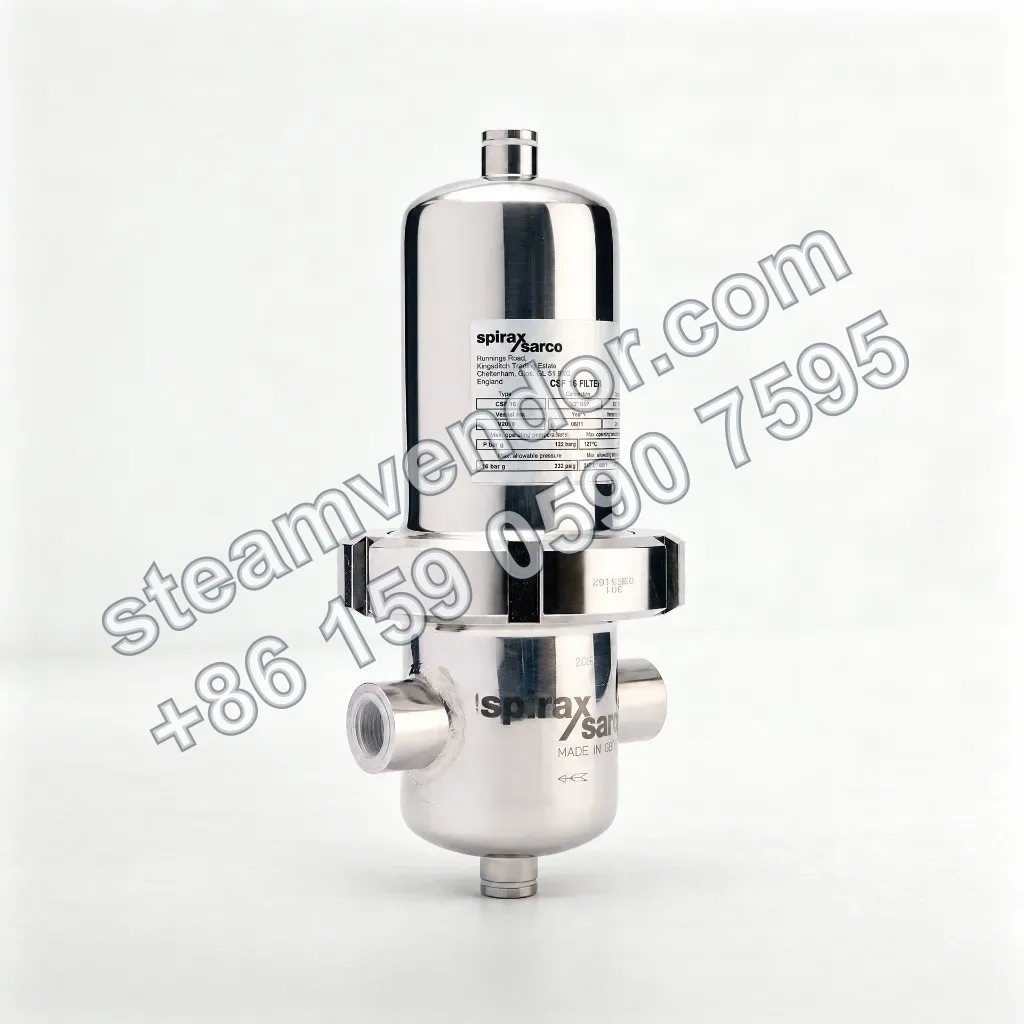
CSF16 Steam Filter, Front View | Spirax Sarco
CSF16 / CSF16T Stainless Steel Steam Filter | Spirax Sarco
High-efficiency horizontal in-line steam filter for removing particulate contaminants from steam systems, with a choice of 304 or 316L housing and 1 / 5 / 25 μm sintered stainless steel filter elements.
Select model
Genuine product assurance
We can help verify product data and purchasing details.
Model confirmation
Confirm model, connection and key options before ordering.
After-sales support
After-sales communication support is provided according to the order agreement.
Specifications
- Product Series
- CSF16 / CSF16T
- Product Type
- Horizontal in-line high-efficiency steam filter
- CSF16 Housing Material
- 1.4301 (304 stainless steel)
- CSF16T Housing Material
- 1.4404 (316L stainless steel)
- Filter Element Material
- Sintered austenitic stainless steel
- Filter Element Rating
- 1 μm / 5 μm / 25 μm (absolute)
- Size Range
- DN8-DN150 (1/4"-6")
- Connection Types
- BSP/NPT threaded, EN 1092 flanged, EN 1735-1 Class 150
- Internal Surface Roughness
- Ra 0.8 μm (etched, passivated, and polished)
- Housing Seal
- EPM / Fluoraz; stainless steel/PTFE spiral-wound gasket for DN100/DN150
- Typical Maximum Allowable Pressure
- Up to approximately 19.3 bar g (depending on Design Reference)
- Typical Maximum Operating Pressure for Saturated Steam
- Approximately 8.5-14.8 bar g (depending on Design Reference and seal)
- Compliance
- PED 2014/68/EU, EC1935:2004, EC2023:2006, FDA Title 21
Application scenarios
Pharmaceutical and Healthcare Steam Filtration
Used to capture particulates in process steam and deliver filtered plant steam, reducing the risk of downstream equipment contamination.
Food and Beverage Culinary Steam
Suitable for culinary steam service when fitted with a 5 μm or finer filter element and installed in accordance with 3A requirements.
Clean and General Industrial Steam
Suitable for horizontal in-line filtration applications requiring the removal of particulate contaminants from steam systems.
Selection points
Select the Housing Material and Size First
Select CSF16 (304) or CSF16T (316L) according to the process medium and sanitary requirements, then confirm the appropriate size within DN8-DN150 and the required L/H capacity version.
Then Select the Filter Rating and Seal
Select a 1 / 5 / 25 μm filter element according to particulate removal requirements and match it with an EPM or Fluoraz seal. The filter element and housing must be ordered separately.
Verify Pressure, Temperature, and Connections
Confirm PMA, PMO, and TMO against the Design Reference and P/T curves in the TI, then select threaded or flanged connections.
Installation & maintenance notes
Installation Orientation and Isolation Valves
Install in the correct flow direction. Upstream and downstream isolation valves are recommended to allow depressurization and cooling before filter element replacement.
Differential Pressure Limit
The differential pressure across CSF16-SE / CSF16-SF steam filter elements must not exceed 5 bar g.
Initial Use in Food-Contact Applications
Before use in an EC1935-compliant food-contact process, the end user should perform an appropriate CIP cycle.
FAQ
What is the difference between CSF16 and CSF16T?
The CSF16 housing is made of 1.4301 (304 stainless steel), while the CSF16T housing is made of 1.4404 (316L stainless steel). Both are horizontal in-line high-efficiency filters designed to remove particulate contaminants from steam systems. Some sizes are also available with low-capacity (L) and high-capacity (H) housing options.
Which filter element ratings are available?
Replaceable sintered austenitic stainless steel filter elements are available with absolute filtration ratings of 1 μm, 5 μm, or 25 μm. Filter elements must be ordered separately from the housing. When fitted with a 5 μm or finer filter element, the unit may be used for culinary steam service in accordance with 3A 609-03 requirements, provided it is installed correctly as specified in the installation and maintenance instructions.
Which regulations and certifications does the product comply with?
The product complies with the EU Pressure Equipment Directive 2014/68/EU, the EC1935:2004 regulation on food-contact materials, and EC2023:2006 good manufacturing practice requirements. Its materials comply with US FDA Title 21, and the manufacturing system is certified to ISO 9001:2015. EN 10204 inspection documentation can be supplied according to the housing PED category, subject to requirements specified at the time of ordering.
What is the approximate pressure and temperature range?
The range varies according to the Design Reference and seal material. Common ratings include PN10 / PN16 / Class 150. For example, some PN16 (EPM) configurations have a maximum allowable pressure of approximately 16 bar g, a maximum operating pressure for saturated steam of approximately 8.5 bar g, and a maximum operating temperature of approximately 178 °C. Configurations with Fluoraz seals can operate at higher temperatures. Selection must be verified against the TI pressure-temperature curves for the actual housing model, connection type, and seal.
How are the filter element and seals replaced?
Before maintenance, isolate the upstream and downstream lines, depressurize the system, and allow it to cool. The allowable differential pressure across CSF16-SE / CSF16-SF steam filter elements must not exceed 5 bar g. Refer to the installation and maintenance page and IM-P180-45 for replacement procedures, recommended tightening torques, and component identification.