

Condensate Recovery Systems for Large Industrial Parks: A Key Approach to Energy Savings and Efficiency Upgrades
A practical guide to steam condensate recovery for large industrial parks: why parks must recover condensate, how to choose open versus closed systems, major equipment and return on investment, and how to select a reliable condensate recovery system provider.
- condensate recovery system
- industrial park
- steam system energy savings
- industrial energy efficiency
- waste heat recovery
Condensate Recovery Systems for Large Industrial Parks: A Key Approach to Energy Savings and Efficiency Upgrades
Reviewed and published by an industrial energy-efficiency team with 15 years focused on steam thermal energy management. The team delivers Spirax Sarco-standard premium steam system design and energy-saving retrofit solutions for large park enterprises in chemicals, pharmaceuticals, food, and related industries.
This article is written for park energy and equipment decision-makers. It explains why condensate recovery matters, how to choose open versus closed systems, how to configure core equipment, and what to look for in a provider. Energy-saving ratios and temperature-rise benefits cited here are common industry experience ranges; they must be calculated from site steam demand, condensate temperature, and network conditions, and must not be treated as investment commitments.
In large industrial parks, steam is a shared core heat medium for many tenant industries such as food, chemicals, textiles, pharmaceuticals, and paper. High-temperature condensate formed after steam heat exchange is often treated as “wastewater” and discharged straight to drains—one of the largest hidden losses on a park energy ledger. A condensate recovery system is a packaged approach that returns this wasted heat and softened water to the boiler. It is also a common retrofit direction for park energy savings and efficiency upgrades, with relatively clear payback.
1. Why Large Industrial Parks Must Recover Condensate
1. Condensate Itself Has High Value
After steam releases latent heat in heat-exchange equipment, the resulting high-temperature water still carries a substantial share of the steam’s total enthalpy. By common industry experience, heat in condensate accounts for about 15%–25% of total steam enthalpy; at sites without recovery, energy lost to direct condensate discharge typically accounts for about 15%–30% of total steam energy use (experience reference). Dumping that heat is equivalent to discarding energy already purchased.
More importantly, condensate is high-quality softened water with very low impurity content. Returning it to the boiler can sharply reduce makeup-water treatment cost and chemical consumption, and lower boiler blowdown rates.
2. Retrofit Pressure Under Efficiency Metrics and Carbon Constraints
Industrial parks worldwide face rising fuel and water costs, greenhouse-gas disclosure, and tighter efficiency targets. As a high-energy unit, the steam system is a common and measurable retrofit entry point. Public guidance from the U.S. Department of Energy (DOE) and similar sources already lists returning condensate to the boiler as a standard energy-saving measure (see the fuel account below). Many organizations also fold steam efficiency into ISO 50001 energy management systems or Scope 1–2 reduction pathways. In published energy-saving case studies, advanced projects can achieve recovery rates above 95%; low recovery means ongoing energy waste and greater pressure under efficiency and carbon management metrics.
3. What Makes Park Sites Distinctive
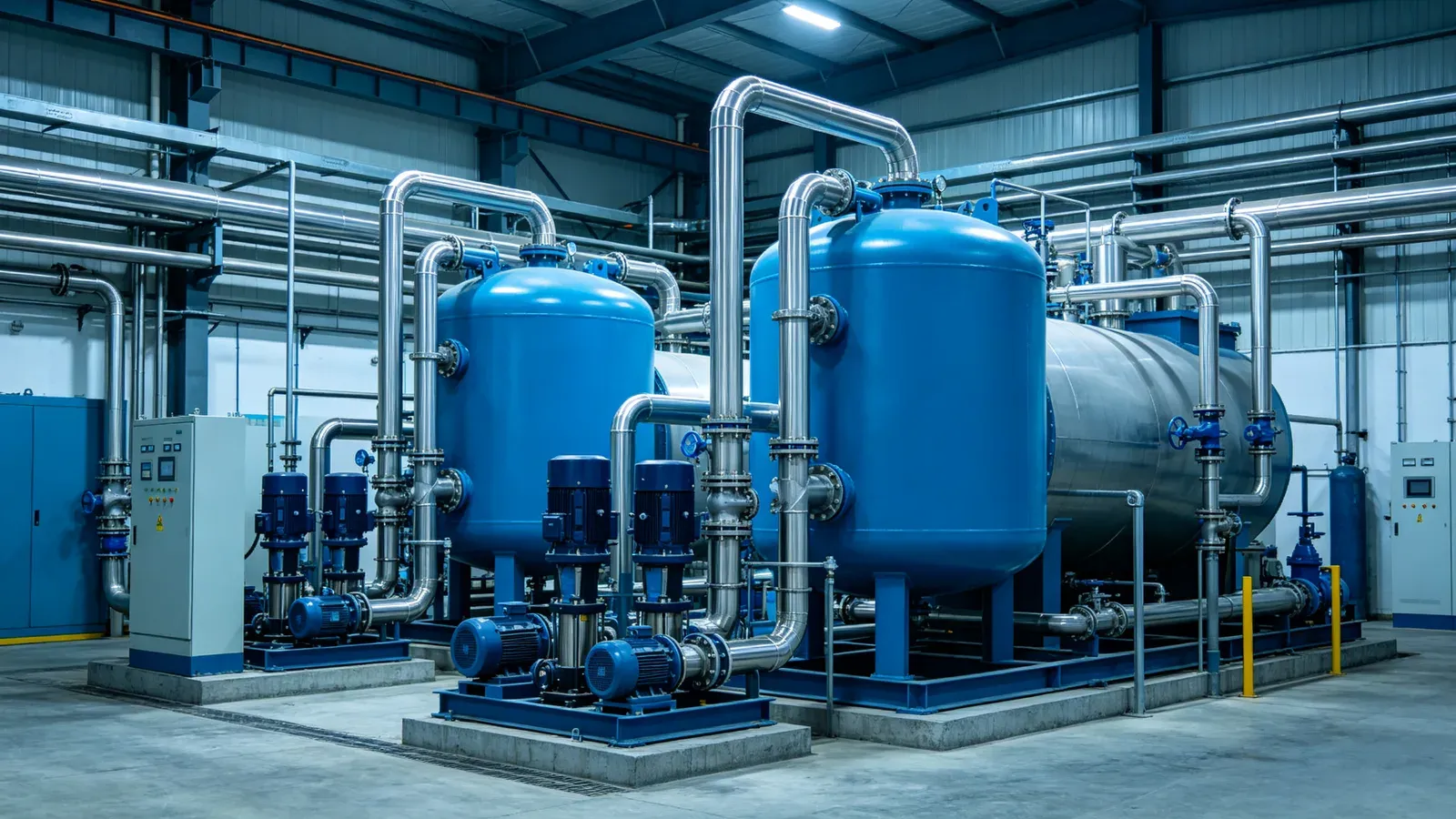
Large parks often share one steam network across multiple enterprises: many steam users, long pipelines, complex pressure classes, and large load swings. If condensate dispersed across tenants is not recovered centrally, heat is wasted and drain discharge creates thermal pollution plus extra water and effluent charges. A park-level condensate recovery system collects dispersed condensate and returns it centrally to the boiler house, closing both the heat and water loops.
2. How Condensate Recovery Saves Energy and Cost for Parks
Condensate recovery benefits break into three accounts: fuel, water, and emissions. Values below are experience references; actual savings depend on fuel unit price, steam load, and system configuration.
Fuel Account: Recover Heat, Burn Less Fuel
Raising boiler feedwater temperature by about 6°C typically saves about 1% of fuel (common experience value). The U.S. Department of Energy (DOE) industrial steam system sourcebook Improving Steam System Performance: A Sourcebook for Industry, and the related tip sheet Return Condensate to the Boiler (Steam Tip Sheet #8), both explain systematically that returning high-temperature condensate to the boiler recovers sensible heat (specific heat × temperature difference) and reduces heat and water-treatment losses from raw makeup and blowdown. The tip sheet also notes that energy in condensate can exceed about 10% of total steam energy in typical systems. Under closed recovery, makeup temperature under suitable conditions can be substantially higher than ambient raw water; many projects see fuel savings of about 8%–12% versus open systems (experience reference; recalculate by fuel type and unit price).
Water Account: Recover Softened Water, Cut Treatment Cost
Condensate is already high-quality softened water. Recovering 1 ton of condensate means 1 ton less raw makeup, with a corresponding reduction in treatment chemicals. For parks with annual steam use in the tens of thousands of tons, water and chemicals are often the second measurable cost after fuel.
Emissions Account: Lower Blowdown and Environmental Cost
Discharging high-temperature condensate to drains creates thermal pollution and effluent charges. After recovery and reuse, boiler makeup quality improves and blowdown rate may fall from about 5% to below 1% (depending on raw water quality and treatment level), so heat lost with blowdown and environmental treatment costs also decline. This item varies by location and should be calculated separately from local effluent fees and actual blowdown rates.
Overall Energy-Saving Reference
Combining common park engineering ranges with the condensate-return logic in the DOE steam efficiency literature above, key metrics before and after retrofit can be compared as follows (ranges are experience references and must be verified on site):
| Comparison item | No recovery (typical direct discharge) | After condensate recovery retrofit | Notes |
|---|---|---|---|
| Condensate recovery rate | 0%–30% | 60%–95%+ | Experience range; depends on system selection and trap condition |
| Boiler makeup temperature | 20–40°C | Above 105°C (closed) | Closed systems reduce flash loss (experience reference) |
| Feedwater temperature rise of 6°C | — | About 1% fuel savings | Common industry experience value |
| Boiler blowdown rate | About 5% | Below 1% | Water-quality improvement yields knock-on benefits (when conditions allow) |
| Overall steam energy intensity | Baseline | Typically down 15%–30% | Depends on industry and retrofit depth; verify on site |
Illustrative Calculation: Park with 100 t/day Steam Use (Assumptions You Can Audit)
The example below assumes 100 t/day steam use, 300 operating days per year, gas-fired steam boilers, and closed recovery, so engineering and finance can audit one shared set of assumptions. Natural gas and water prices use illustrative industrial mid-range unit prices (USD) for formula checks; if local gas prices are higher or lower, or if boilers are coal- or biomass-fired, replace fuel unit price, lower heating value, and boiler efficiency and recalculate—the logic stays the same.
Base assumptions
- Annual steam use: 100 t/day × 300 days/year = 30,000 t/year
- Condensate recovery rate: closed system, conservative 85% → annual recovered condensate 25,500 t
- Temperatures: ambient raw makeup 20°C; closed return at 105°C → ΔT = 85°C
- Average gas-fired boiler thermal efficiency: 92%
- Natural gas lower heating value: about 35,500 kJ/m³; illustrative industrial gas price USD 0.50 / m³
- Combined tap water + softening chemical cost (illustrative): USD 1.20 / t
Account 1: Fuel (sensible heat recovery)
Specific heat of water is taken as 4.187 kJ/(kg·°C). Per ton recovered and heated by 85°C:
Equivalent natural gas (including boiler efficiency):
Illustrative annual fuel savings:
Account 2: Water (softened water)
Account 3: Blowdown and environmental cost (illustrative)
With less makeup and a lower blowdown rate, heat carried away by blowdown and local effluent/wastewater treatment fees decline. Regional variation is large; this item is shown only as a conservative illustrative order of several thousand to tens of thousands of USD per year. Formal estimates should use local fee schedules and actual blowdown rates, and should not be treated as equal in weight to the fuel and water accounts.
How to read these results
- Under these assumptions, fuel + water total about USD 169,600 / year—the two primary accounts that can be checked first with formulas.
- Capex varies widely with network length, pump configuration, flash recovery, and control scope. This article does not promise a fixed “USD 150,000 investment and 10-month payback”; when using this model, insert your park’s real quotes and gas price to calculate simple payback.
- This model counts only condensate sensible heat from temperature rise, not flash-steam reuse; if flash recovery is added, fuel-side benefits may be higher and should be listed as a separate operating case.
3. Open Versus Closed: How to Choose Condensate Recovery System Types
Park condensate recovery systems mainly take two forms—open (gravity/pumped open recovery) and closed (sealed pressurized recovery). Selection directly determines energy savings and investment scale.
Open recovery system: Condensate returns to an open collection tank and is then pumped. The layout is simple and capital cost is lower. However, high-temperature condensate flashes heavily at the open surface, heat loss is significant, and contact with air introduces dissolved oxygen that accelerates pipe corrosion. Suitable for small flows and moderate temperatures.
Closed recovery system: The return network stays under positive pressure and condensate is conveyed as liquid in a sealed line back to the boiler house, with almost no flash loss and high heat recovery (many mature projects exceed 90%). Oxygen ingress is avoided, protecting piping and boilers. Suitable for large parks with high temperature and pressure, long distances, and high recovery targets.
| Comparison dimension | Open recovery system | Closed recovery system |
|---|---|---|
| Heat recovery rate | About 60%–70% | 85%–95%+ |
| Makeup temperature | About 60°C | Above 105°C |
| Flash loss | Significant | Nearly zero |
| Oxygen corrosion risk | Higher | Low |
| Capital cost | Lower | Higher |
| Typical application | Medium/small loads, low-temperature condensate | Large parks, high temperature and pressure, long distance |
For large parks, a closed recovery system usually better matches high recovery targets: initial investment is higher, but under suitable conditions fuel savings and equipment life benefits often cover the capital gap over the operating period; whether it “pays” still depends on load, distance, and fuel price.
4. Core Components and Key Equipment in Park Condensate Recovery Systems
A complete park-level condensate recovery system typically includes the following stages:
- Steam traps: Installed at the outlet of each steam-using unit to discharge condensate from heat exchange promptly while preventing steam leakage—the “first gate” of the whole recovery system. Trap selection and maintenance directly determine recovery efficiency. In field operations, leaking or failed traps are not uncommon and are a frequently overlooked loss point in park energy management. Products such as the Spirax Sarco FT14 Series Ball Float Steam Trap can discharge condensate continuously and stably while blocking steam loss.
- Condensate collection tanks / receivers: Collect condensate returned from steam users, separate steam and water, provide buffering, and stabilize system pressure.
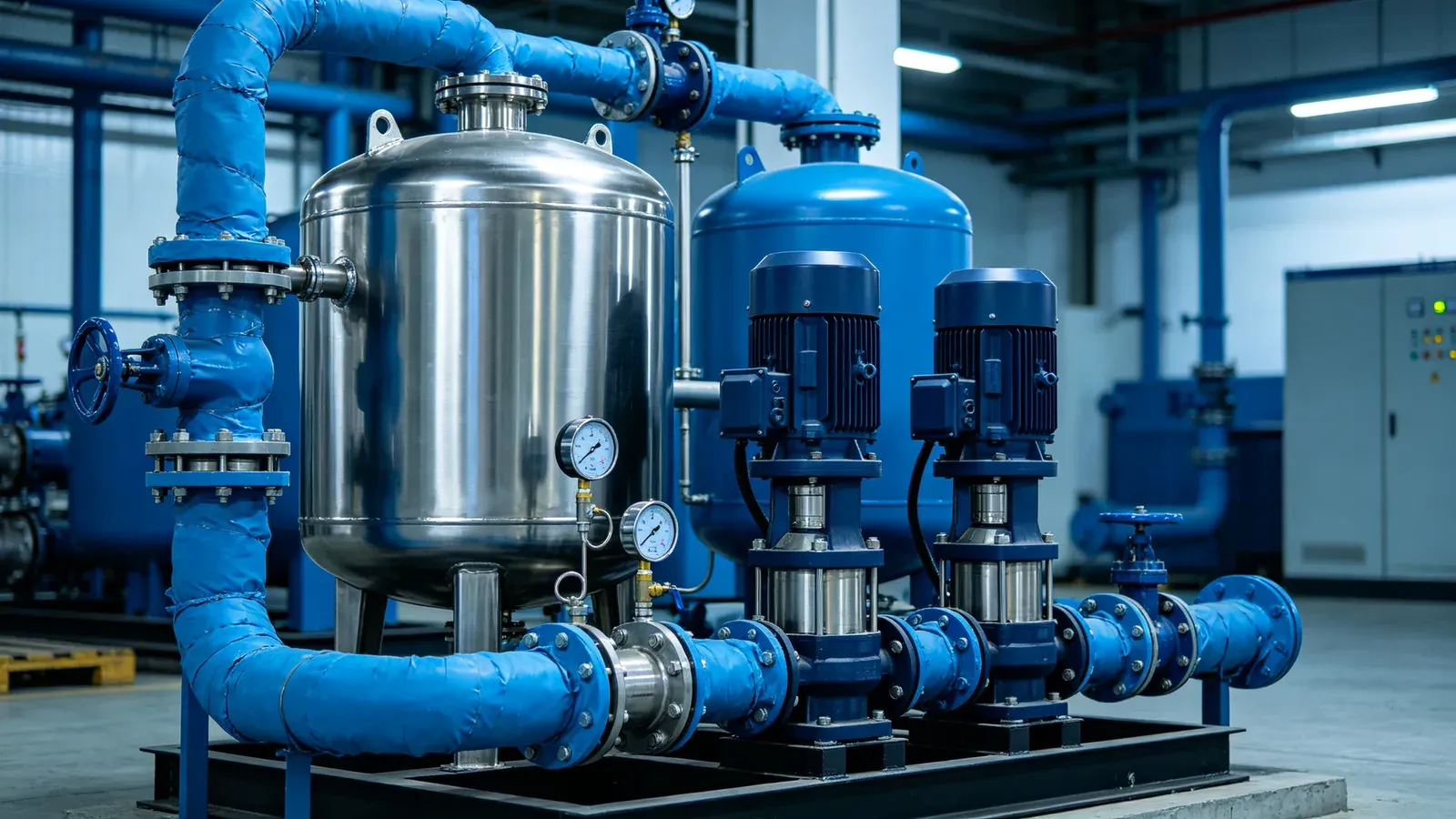
- Condensate recovery pump sets: Pressurize condensate from low-level receivers back to the boiler house. Mechanical (steam-driven) and electric drives are the two mainstream options; long-distance transfer especially stresses head, cavitation and vapor lock risk, and reliability. See on-site condensate recovery pump product materials for reference.
- Flash vessels and flash-steam recovery equipment: Reuse secondary steam produced when high-temperature condensate flashes on pressure reduction, recovering low-grade heat.
- Boiler blowdown and heat recovery equipment: Pair devices such as the boiler blowdown vessel BDV60 and bottom blowdown controller BT1050 to complete the steam–condensate loop and cut blowdown heat loss.
- Water treatment and monitoring systems: Water-quality monitoring, TDS control, and self-diagnostics before condensate reuse, ensuring recovered water can safely return to the boiler.
When planning a recovery system, parks should design traps, recovery pumps, collection, and flash equipment as one integrated scheme rather than buying single devices in isolation.
Two Common “Hidden Pitfalls” in Large-Park Scheme Design
- Backpressure conflicts across multiple pressure classes: Condensate discharged by different park enterprises is often at different pressures. Direct common headers can let high-pressure returns suppress low-pressure returns, causing flooding on the low-pressure heat exchanger side, poorer heat transfer, and higher water-hammer risk. Schemes need staged trapping, flash pressure reduction into a common network, or zoned returns—not simply tying every return into one header.
- Contamination control and online water-quality interception: In chemical, pharmaceutical, or food service, exchanger tube leaks can contaminate condensate with process fluids (oils, acids/alkalis, etc.). Direct return to a common tank can degrade feedwater quality for the whole boiler plant. Systems should include online hardness/conductivity/TOC monitoring and automatic diversion (for example, three-way valve trip to waste) so abnormal streams are isolated immediately, protecting boilers and main networks.
5. How to Select a Reliable Condensate Recovery System Provider
Condensate recovery projects for large industrial parks involve substantial investment and many stakeholders. When selecting a provider, focus on these five points:
- System design and engineering experience: Ability to deliver an overall scheme for park network topology, pressure classes, and load swings—not only single devices. Prefer providers with large-park / multi-user steam system references.
- Core equipment brands and system coordination: Reliability of traps, recovery pumps, and related components directly determines recovery rate and O&M cost. Long-distance high-temperature condensate transfer at park scale is prone to cavitation, vapor lock, and similar issues. Prefer leading brands such as Spirax Sarco with complete product lines and strong field validation in steam trapping, condensate recovery, and boiler-house auxiliaries, plus reliable supply channels, so frequent downtime does not erase energy savings.
- Recovery-rate targets and measurement capability: Ability to state quantifiable, auditable recovery targets and calculation assumptions (for example, aiming above 90%), and to provide before/after efficiency comparison methods—not verbal promises alone.
- After-sales service and spare-parts support: Park steam systems run 24 hours; providers need timely communication, spare-parts supply, and necessary on-site support.
- Compliance and certification: Whether equipment and schemes meet local pressure-equipment, boiler, and energy-efficiency requirements, with corresponding documentation and reliable authorization channels.
6. Frequently Asked Questions (FAQ)
Q: How much money can a condensate recovery system save a park?
A: Depending on industry and retrofit depth, overall steam energy intensity often falls by about 15%–30% (experience range). Exact savings must be calculated from steam demand, condensate temperature, fuel unit price, and system selection.
Q: How should we choose between open and closed systems?
A: For small loads and low-temperature condensate, open systems can limit capital cost. For large parks with high temperature and pressure and long-distance transfer, closed systems are usually a better fit for higher recovery rates and more stable operating cost.
Q: Can an existing park be retrofitted?
A: Yes. Older parks can upgrade traps and add recovery pump sets and collection equipment; scope is usually smaller than a full rebuild. Simple payback often falls around 1–3 years depending on load and fuel price, and must be calculated case by case.
Q: What condensate recovery rate is typically achievable?
A: Mature closed-system cases commonly exceed 90%, and advanced projects can reach 95%+; achievable values depend on the network, trap condition, and water-quality management.
Q: After condensate recovery, how should flash steam be handled? Is venting it a waste?
A: Pressure reduction of high-temperature condensate produces flash steam that still carries substantial heat. A sound approach is to separate it in a flash vessel and use low-pressure flash steam for park heating, domestic hot water, or as low-grade heating steam for boiler deaerators; if pressure is too low, evaluate whether steam injectors or similar means can upgrade and reintroduce it. Whether and how to recover flash steam should be assessed together with low-pressure heat users and capital cost.
Closing: Recommended Next Steps
For large industrial parks, condensate recovery systems often act on fuel, water charges, and blowdown-related costs at once, and are a common, measurable retrofit item on efficiency-upgrade and carbon-management pathways. Progress in this order:
- Establish current recovery rate, condensate temperature, and major steam-user locations
- Decide whether open or closed better matches network distance and pressure classes
- First check trap leakage and failure, then define collection, pump-set, and flash configuration
- Include water-quality monitoring and contaminated-stream isolation so a single point of contamination cannot compromise the main header
If you need a customized Condensate Recovery Economic Benefit Detailed Calculation Report based on your park’s actual gas price, effluent fees, and network pressures, please contact our steam system technical advisors. We will provide a free initial scheme assessment.
Recommended products
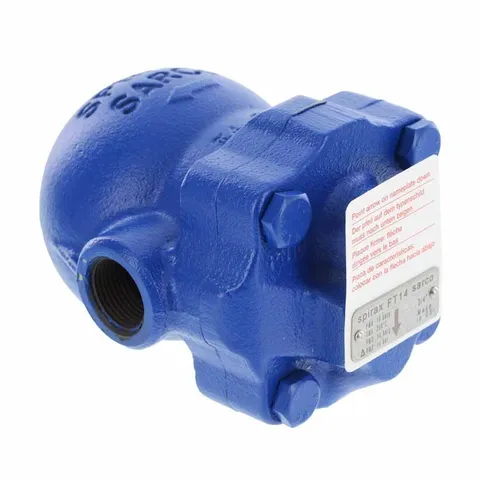
Spirax Sarco FT14 Series Ductile Iron Ball Float Steam Trap
A ball float steam trap for continuous condensate discharge from steam equipment; a core front-end device in condensate recovery systems.
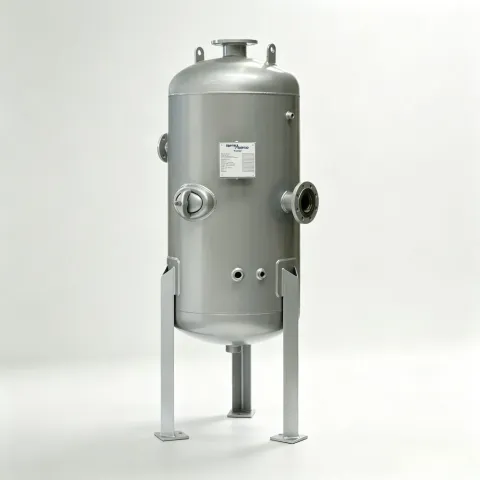
Spirax Sarco BDV60 Boiler Blowdown Vessel
A boiler blowdown vessel for bottom blowdown, TDS control, and flash heat recovery, completing the steam and condensate circulation system.
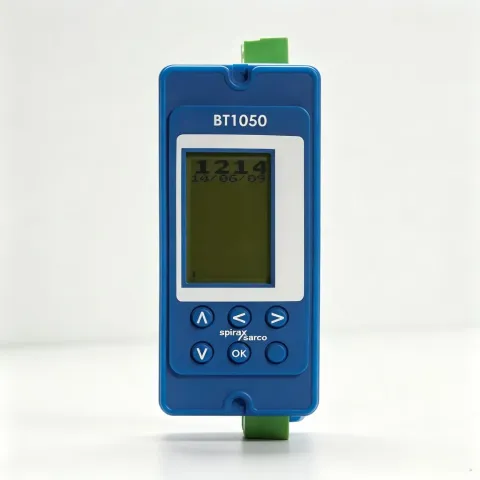
Spirax Sarco BT1050 Boiler Bottom Blowdown Controller
A timed boiler bottom blowdown controller supporting multi-cycle programs and multi-boiler coordination for boiler house automation.