

Steam: A High-Quality Energy Fluid for Industry
A systematic review of steam's six comprehensive advantages as a core industrial energy fluid, including high-efficiency energy savings, low-cost transportation, precise control, safety and cleanliness, ease of maintenance, and suitability across industries, with a comparative analysis against media such as hot water and thermal oil.
- Steam Systems
- Industrial Steam
- Energy Conservation and Emissions Reduction
- Combined Heat and Power
- Boilers
Mentioning steam, most people still associate it with locomotives and old-fashioned equipment from the Industrial Revolution. In modern industrial systems, however, steam has long shed its traditional image and become a core energy medium across power generation, food processing, chemicals, healthcare, textiles, heating, and many other industries. As a controllable, efficient, economical, and safe energy fluid, steam offers unique overall advantages and remains the preferred solution for industrial heat transfer and energy conversion.
1. Core Advantages: An Efficient and Economical Method of Energy Generation
The core value of steam lies in its exceptional energy-conversion efficiency and economy. Steam is generated from water, a resource that is abundant, inexpensive, non-toxic, harmless, and environmentally friendly, making it a naturally high-quality energy carrier. Data shows that, at the same mass, steam contains five to six times the potential energy of liquid water, giving it a highly significant energy-storage advantage.
The principle of steam generation is simple and controllable: water continuously absorbs energy as it is heated in a boiler and vaporizes at the corresponding temperature as the boiler pressure changes, forming high-temperature steam. This converts the chemical energy of the fuel into thermal energy and enables precise supply to various production processes and space-heating applications. Steam temperature and pressure are also positively correlated: the higher the pressure, the higher the steam temperature and the greater its thermal energy and work capacity, allowing it to meet the requirements of various high-temperature industrial processes.
The evolution of modern boiler technology has further enhanced the energy-saving and environmental benefits of steam. New shell boilers use compact structures, multi-channel heat-transfer designs, and high-efficiency burners to maximize fuel utilization and substantially reduce exhaust emissions. They offer strong fuel adaptability: in addition to conventional energy sources, they can consume combustible industrial waste, enabling resource recycling. Centralized boiler rooms can also leverage the advantages of interruptible natural-gas tariffs and maintain backup fuel supplies to address fluctuations in gas supply, ensuring stable production while controlling energy costs.
Heat-recovery systems further improve the steam cycle by recovering waste heat and returning clean condensate to the boiler. Together with boiler control systems and blowdown vessels, they nearly eliminate blowdown losses and comprehensively improve the operating efficiency of steam and condensate circulation systems. Combined heat and power (CHP) systems, which are now widely favored across the industry, capitalize on the high efficiency of steam systems to provide coordinated thermal and electrical energy, aligning with the development trend toward industrial energy conservation and low-carbon environmental protection.

2. Convenient Distribution: A Low-Cost, Low-Loss Medium for Thermal Energy Transfer
In long-distance thermal energy transmission, steam offers unmatched advantages and is one of the most widely used long-distance heat-transfer media in industry. Unlike hot water and heat-transfer oil, steam flows naturally through pipelines under a pressure differential, eliminating the need for expensive circulation and pumping equipment and reducing capital investment and operating energy consumption at the source.
With its exceptionally high heat-value density, high-pressure steam can transmit large amounts of energy through small-diameter pipelines. Pressure only needs to be reduced as required at the point of use to meet production needs. This distribution method simplifies pipeline installation, reduces construction difficulty, and substantially lowers the material and labor costs of network construction. Overall, the capital investment and operating and maintenance costs of an integrated steam-generation, distribution, and condensate recovery system are far lower than those of systems based on natural gas, hot water, heat-transfer oil, electricity, and other energy media. This is also a key reason why many companies prioritize steam systems.
3. Precise Control and Efficient Heat Transfer: Adaptable to Diverse Production Applications
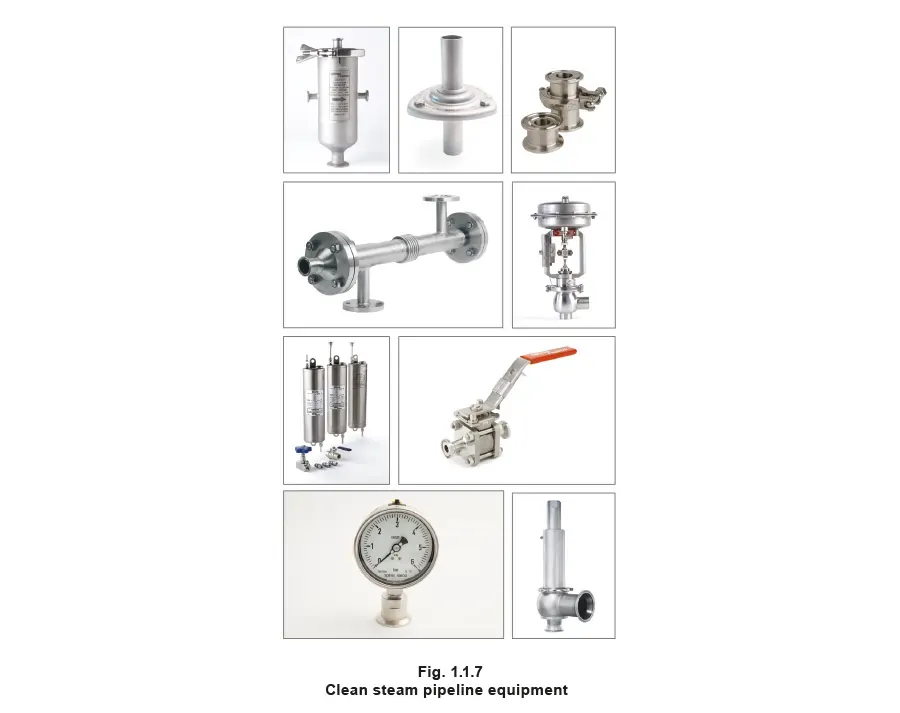
Industrial production requires highly precise control of temperature and energy input. Steam offers excellent controllability and is well suited to refined production requirements. The pressure and temperature of saturated steam have a strict corresponding relationship, so operators can precisely control the energy input to the production process simply by regulating steam pressure. Combined with modern pneumatic actuators, control valves, and intelligent valve positioners, steam control systems can respond rapidly to changes in operating conditions. Their control accuracy far exceeds that of three-way valves used in conventional liquid heat-transfer systems, while installation is simpler and equipment costs are lower.
Steam’s performance advantages are even more pronounced in heat-transfer applications. Steam provides highly efficient condensing heat transfer. Once it reaches the production equipment, it transfers heat evenly to the heated product through a constant-temperature condensation process. Whether used for external heating or internal injection heating, steam can fully fill the equipment space and maintain constant-temperature heat transfer throughout the process, eliminating issues such as product deformation and uneven quality caused by temperature gradients during hot-water or high-temperature oil heating.
The high heat-transfer performance of steam enables more compact equipment. For example, a 1200kW packaged steam-to-water heating system equipped with steam heat exchange units and a complete control system occupies only 0.7 square meters, whereas a shell-and-tube hot-water heat-exchange system with the same capacity occupies two to three times as much space. The smaller equipment footprint not only saves plant space but also reduces installation and maintenance difficulty.
4. Easy Maintenance and Long Service Life: A Stable Choice for Modern Industry
In large-scale industrial production, equipment maintenance difficulty, system stability, and service life are key factors in controlling production costs. As industrial energy-conservation requirements become increasingly stringent and market competition intensifies, efficient, low-cost maintenance has become a core source of competitiveness for companies. Steam systems are well suited to this need.
Steam systems offer strong compatibility with intelligent control and can integrate seamlessly with SCADA systems, building management systems, and energy management systems to enable centralized, automated control across an entire plant. They can also switch to independent single-unit operation according to production requirements, providing flexible control modes. Their automated monitoring systems are mature. With steam trap monitoring equipment, they can automatically and accurately identify pipeline leaks, blockages, and other faults and issue real-time maintenance alerts. Compared with the expensive equipment required for gas-leak detection and the manual monitoring required for oil and water systems, this greatly reduces maintenance difficulty and cost.
Steam equipment is also highly durable and can operate reliably for long periods when properly maintained. Equipment servicing is convenient and efficient, and system components can be quickly isolated and drained, substantially shortening shutdown maintenance time. In older plants, upgrading existing steam equipment with intelligent control systems and monitoring devices costs far less than replacing it with new energy systems such as distributed natural-gas systems, providing clear economic benefits. In addition, steam systems operate with low noise, can be expanded modularly, and are suitable for industrial applications of all sizes, from small to large.
5. Versatile, Safe, and Clean: Covering Applications Across All Industries
Steam is more than a single thermal energy carrier. It is also a multifunctional energy fluid with clean, safe, and flexible characteristics. Its sterile and clean properties make it a core process medium in food processing, pharmaceuticals, and healthcare, where it is widely used in product manufacturing, equipment sterilization, space sanitation, and other processes. At the same time, steam’s safety profile, with no sparks and no combustion risk, makes it suitable for high-risk, flammable, and explosive operating environments in the petrochemical and chemical industries. Many petrochemical plants use steam fire-extinguishing systems to strengthen production safety.
From large petroleum and petrochemical complexes and paper and textile factories to small laundries and heating systems for civil buildings, steam is used in a wide range of applications. In specialized industries such as brewing, steam can meet temperature-control requirements throughout the production process through methods including injection and coil heating. It can provide both process heating and space heating, allowing one system to meet multiple production needs with unmatched flexibility.
6. Comparison of Multiple Media: Steam’s Overall Core Competitiveness
The main heat-transfer media currently used in industry include hot water and high-temperature heat-transfer oil. A multidimensional comparison clearly demonstrates steam’s overall advantages.
Energy density: The latent heat of steam can reach 2100 kJ/kg, far exceeding that of hot water and high-temperature oil, giving it significantly superior heat-transfer efficiency.
Cost: Steam benefits from the low cost of water resources and requires only limited water-treatment expenses. High-temperature heat-transfer oil, by contrast, is expensive and must be replaced regularly, resulting in very high operating and maintenance costs.
Transmission and control: Steam requires no circulation pump and can be transported by a pressure differential through small-diameter pipelines, making installation simple. Hot water and heat-transfer oil both require high-power circulation pumps and large-diameter pipelines, resulting in higher equipment and network costs.
Temperature control: Steam can be rapidly and precisely temperature-controlled through a pressure-reducing valve, while a two-way valve is sufficient for refined control. Temperature control for hot water and heat-transfer oil is more complex and requires three-way valves and differential-pressure valves, with lower control accuracy and greater operating difficulty.
Stability and environmental performance: Steam condensate can be recovered and reused, and flash-steam heat transfer can be supported, resulting in low energy consumption and low losses. The system has no fire risk and requires only basic water treatment for corrosion prevention, making it environmentally friendly and safe. High-temperature oil, by contrast, presents a fire hazard, is prone to medium loss, requires highly precise maintenance, and is unsuitable for large industrial systems.
Conclusion
From the power source of the Industrial Revolution to a core energy fluid in modern industry, steam has evolved with the times while consistently maintaining its leading position as the preferred industrial heat-transfer medium through its combined advantages of high efficiency, energy conservation, low cost, safety, cleanliness, controllability, flexibility, ease of maintenance, and broad applicability. Whether used for power generation, industrial manufacturing, civil heating, or medical sterilization, steam plays an irreplaceable role. Against the backdrop of China’s carbon peaking and carbon neutrality goals, energy-saving technologies such as combined heat and power and waste-heat recovery further highlight the environmental and economic value of steam systems, making them an important foundation for the high-quality development of modern industry.
Recommended products
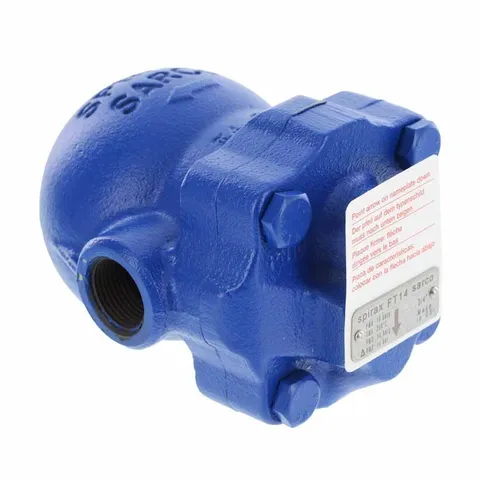
Spirax Sarco FT14 Series Ductile Iron Ball Float Steam Traps
Ductile iron ball float steam traps for continuous condensate discharge from steam equipment, with an optional steam lock release device.
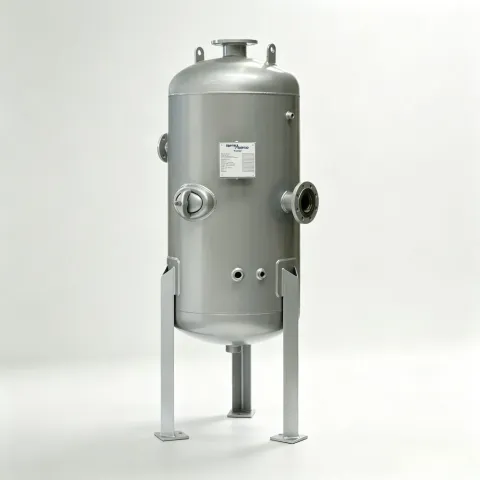
Spirax Sarco BDV60 Boiler Blowdown Vessel
Boiler blowdown vessel for bottom blowdown, TDS control, and heat recovery, with PN16 flange connections.

Spirax Sarco BT1050 Boiler Bottom Blowdown Controller
Timed boiler bottom blowdown controller supporting three independent timers and multi-boiler coordination.