

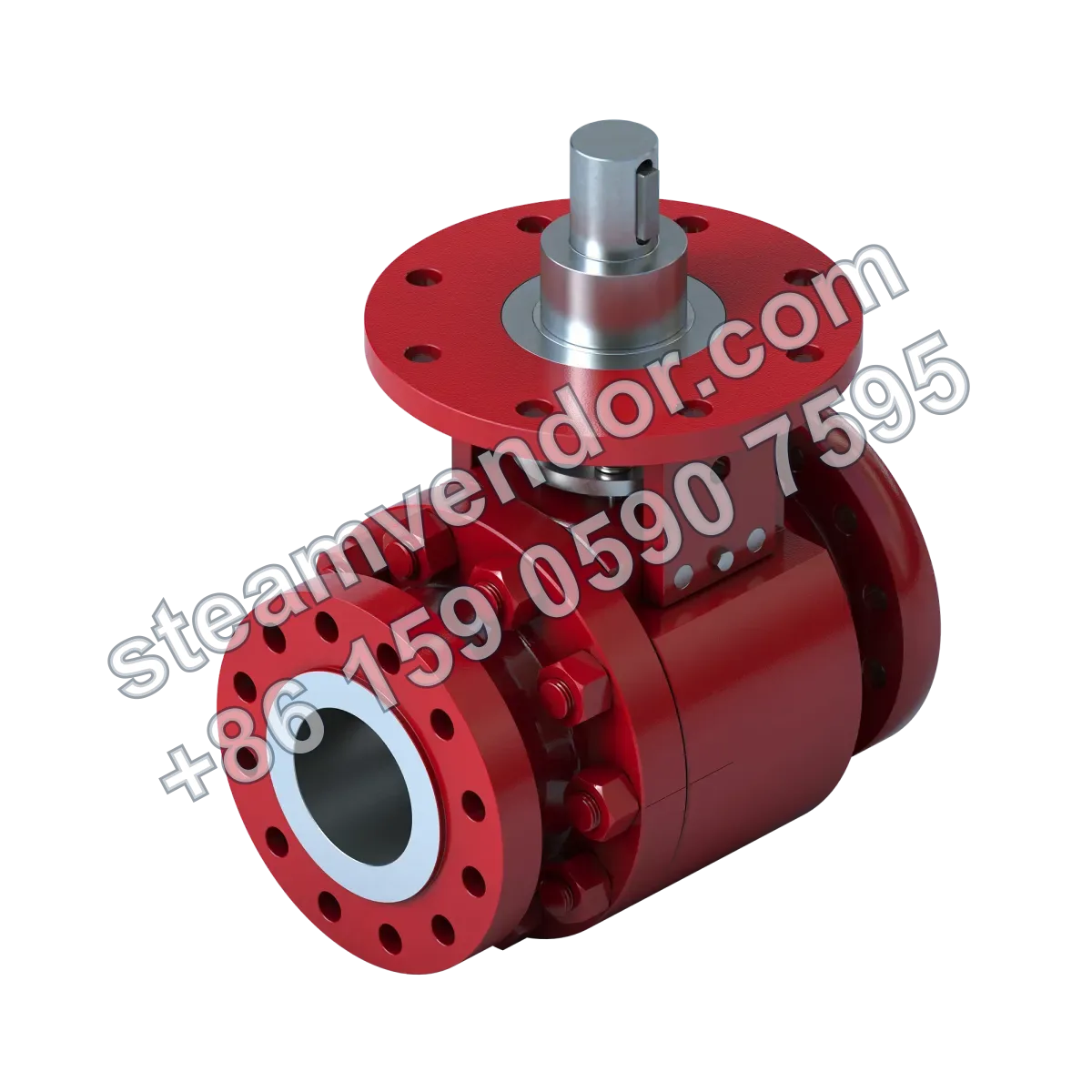
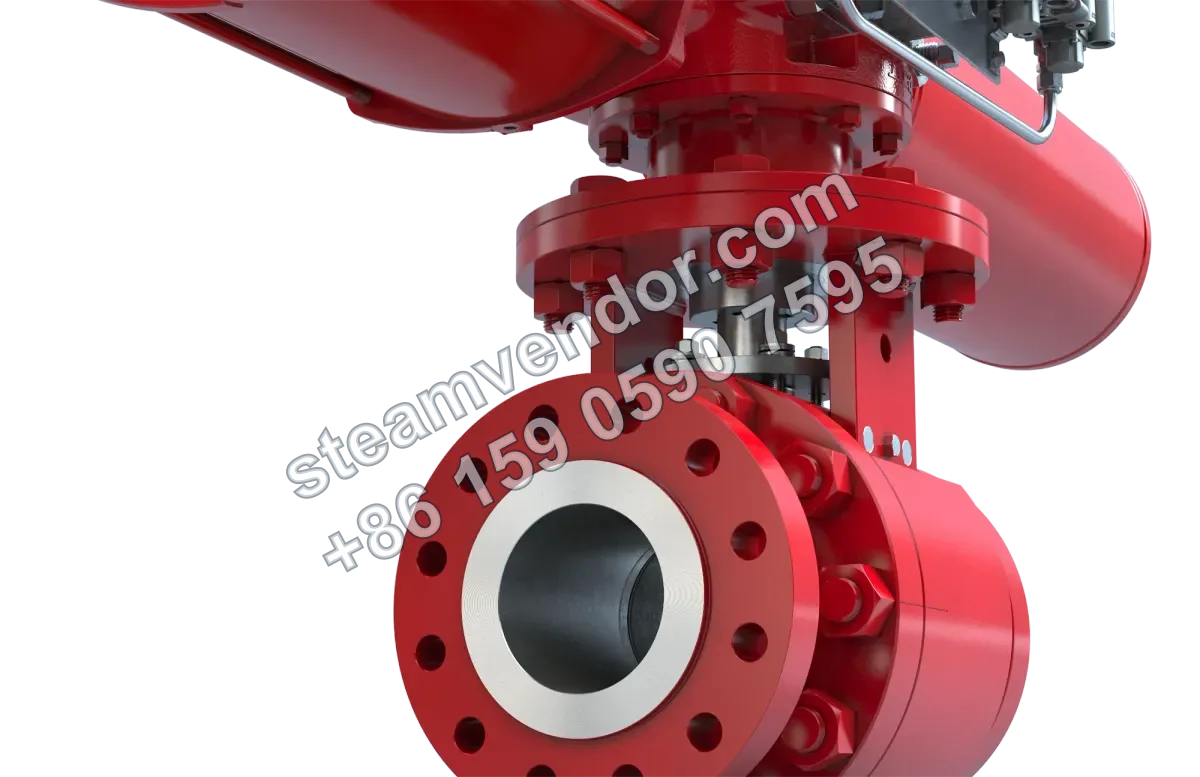
Bray M1 Series severe-service metal-seated ball valves are designed for on/off control in high-temperature, high-pressure piping systems. Sizes range from NPS ½ to 36, with a maximum operating temperature of 593°C and pressure ratings up to ASME Class 4500. Available with a variety of body and trim materials, as well as flanged and welded end connections, with full-port, standard-port, or reduced-port configurations.
M1 Series Severe Service Ball Valve Product Image
1 / 3
Bray M1 Series Severe Service Metal-Seated Ball Valve
High-temperature, high-pressure metal-seated ball valve for demanding service conditions, available with multiple end connections
Genuine product assurance
We can help verify product data and purchasing details.
Model confirmation
Confirm model, connection and key options before ordering.
After-sales support
After-sales communication support is provided according to the order agreement.
Specifications
- Size Range
- NPS ½ to 36 / DN 15 to DN 900
- Operating Temperature Range
- Up to 1100°F (593°C)
- Maximum Operating Pressure Rating
- ASME Class 150 to 4500, EN 1092 PN10 to 720
- Body Materials
- Standard forgings: A105 carbon steel, A182 F3 austenitic stainless steel, A182 F9 alloy steel; standard castings: A216 Gr WCB, A351 GR CF8M, A217 Gr C12 alloy steel
- Body Type
- Split-body construction (two-piece and three-piece)
- Seat Materials
- Standard: 410 stainless steel, 316 stainless steel; optional: Inconel, Incoloys, titanium, duplex stainless steel, 17-4 PH stainless steel
- Ball Materials
- Standard: 410 stainless steel, 316 stainless steel; optional: Inconel, Incoloys, titanium, duplex stainless steel, 17-4 PH stainless steel
- Stem Materials
- Standard: A638 Gr 660; optional: Inconel, Incoloys, titanium, 17-4 PH stainless steel, duplex stainless steel
- End Connections
- Raised-face flanged (ASME B16.5, EN 1092-1), ring-type joint (ASME B16.5), butt-welded (ASME B16.25), socket-welded, Grayloc®
- Port Type
- Full port, standard port, reduced port, special port
- Face-to-Face Standard
- ASME B16.10, EN 558-1
- Design Standards
- ASME B16.34, API 608, PED
- Fugitive Emissions Standards
- API 641, ISO 15848-1
- Actuator Mounting Standard
- ISO 5211
- Certifications
- API 607, API 641, CRN, ISO 15848-1, ISO 15848-2, PED, PE(S)R, TR CU
Selection points
Applications for High-Temperature, High-Pressure, Severe Service
The M1 Series is a metal-seated ball valve designed for severe isolation service involving high temperatures, high pressures, corrosion, and erosion. The maximum operating temperature is 593°C, and pressure ratings are available up to ASME Class 4500.
360-Degree Mate-Lapped Ball-and-Seat Sealing Structure
The M1 Series uses a 360° Mate-Lapped ball-and-seat design to form a metal sealing pair, making it suitable for severe-service isolation valve applications.
Optional Corrosion- and Wear-Resistant Ball and Seat Materials
The ball and seat are supplied as standard in 410 stainless steel or 316 stainless steel. Optional materials include Inconel, Incoloys, titanium, duplex stainless steel, and 17-4 PH stainless steel. Materials can be selected according to the fluid's corrosivity, abrasiveness, and temperature conditions.
Live-Loaded Packing and Stem Alignment Design
The M1 Series features live-loaded packing and a stem alignment design to reduce lateral stem loads and extend packing service life.
Multiple End Connections and Bore Options
The M1 Series is available with raised-face flanges, ring-type connections, butt-weld ends, socket-weld ends, and Grayloc end connections. Full-bore, standard-bore, reduced-bore, and special-bore options are also available.
Installation & maintenance notes
Verify Temperature Conditions and Material Configuration
Before installation, confirm that the site temperature conditions and fluid characteristics are compatible with the valve's design conditions and the selected body, seat, ball, and stem materials. The M1 Series is customized for specific applications, with a maximum operating temperature of 593°C. Operation beyond the design conditions or with unsuitable materials may affect sealing performance and service life.
Confirm Compatibility of End Connections and Piping Interfaces
Before installation, confirm that the end connection configuration of the supplied valve matches the piping interfaces and applicable connection standards. The M1 Series can be configured with raised-face flanges, ring-type connections, butt-weld ends, socket-weld ends, and Grayloc® end connections. Incompatible connections may affect installation and sealing performance.
FAQ
How do M1 Series severe service ball valves operate, and under what extreme conditions are they suitable?
The M1 Series uses a metal-seated ball valve design featuring a 360° Mate-Lapped ball and seat, heavy-duty drive train, and live-loaded packing. It is designed for high-temperature, high-pressure, corrosive and erosive service conditions, as well as severe service applications, making it suitable for demanding power generation, mining, oil and gas applications. Specific operating principles and valve selection require process analysis based on the actual medium, temperature, and pressure conditions.
How should I consider seat and ball material compatibility during selection?
The M1 Series offers multiple seat and ball material options. Evaluate them based on temperature, media corrosivity, abrasion severity, and thermal-shock risk to ensure good sealing performance and durability at the same temperature. Confirm specific material combinations according to actual process conditions.
What sizes and connection options are available for this series?
Sizes range from DN15 to DN900 (or corresponding NPS ½ to 36), with multiple end connection options including raised-face flanged, ring-type joint, butt-welded, socket-welded, and Grayloc®. Specific sizes and connections depend on site conditions and the actuator.
What are the performance limits of the M1 Series in high-temperature environments?
The temperature range extends up to 593 °C (1100 °F). Consult the factory for confirmation of specific higher-temperature applications. Different material combinations affect temperature capability and should be matched to actual service conditions.
How should the M1 Series be installed and maintained to ensure long-term reliability?
Follow design standards and testing requirements (such as ASME B16.34, API 608, and PED), together with actuator mounting, stem alignment, coating treatment, and packing life management, to achieve stable sealing and minimize downtime. Specific maintenance methods should be evaluated based on site fluid conditions and process configuration.
Documents
Product Brochure - Ball Valve OverviewProduct information · EnglishProduct Brochure - M1 Series Severe Service Metal-Seated Ball Valves for Delayed CokingProduct information · EnglishProduct Brochure - M1 Series Severe Service Ball ValvesProduct information · EnglishProduct Brochure - Válvula de Bola Servicio Severo con Asiento de Metal Serie M1Product information · EnglishApplication Guide - M1 Severe Service Ball Valves for Delayed CokingProduct information · EnglishIOM Manual - M1 Series Severe Service Ball ValvesManual · EnglishIOM Manual - M1 Series Severe Service Ball ValvesManual · ChineseIOM Manual - Zawór Kulowy Do Pracy W Trudnych Warunkach Flow-Tek® Seria M1Manual · EnglishIOM Manual - Serie M1 Válvula de Bola de Servicio SeveroManual · EnglishSafety Manual - F15/F30 Series Metal-Seated and M1 Series Severe Service Ball ValvesManual · EnglishRecommended Specifications - M1 Series Severe Service Ball ValvesProduct information · English