

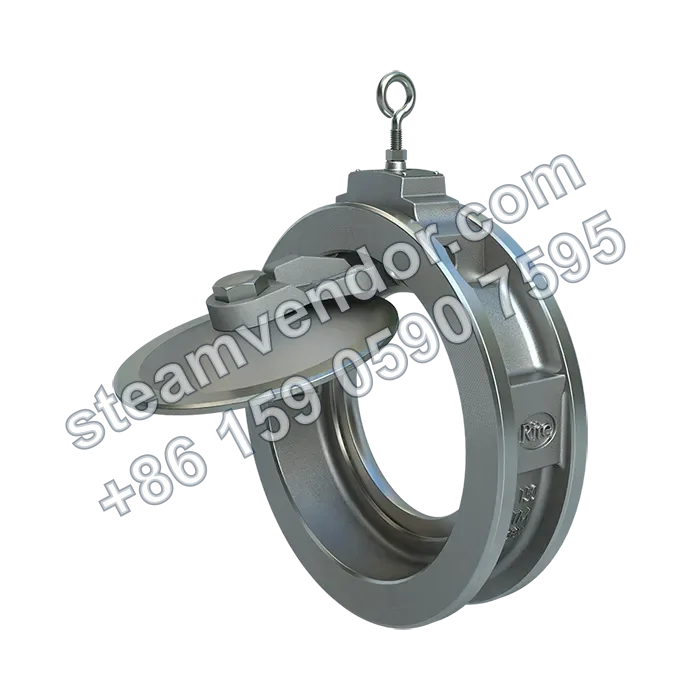
Bray Bray/Rite® wafer combination swing check valve for 1" to 60" pipelines, available with wafer, flanged, and RTJ body configurations. The valve uses SS316 as the standard disc material and provides zero-leakage sealing. It reaches the fully open position at an average flow velocity of 3 ft/s, making it suitable for backflow prevention at industrial pump outlets and low-velocity, variable-flow process pipelines with control valves. It helps reduce water hammer, pressure drop, and vibration.
Bray/Rite® check valve product image
Bray/Rite® check valve rear cover open view
1 / 2
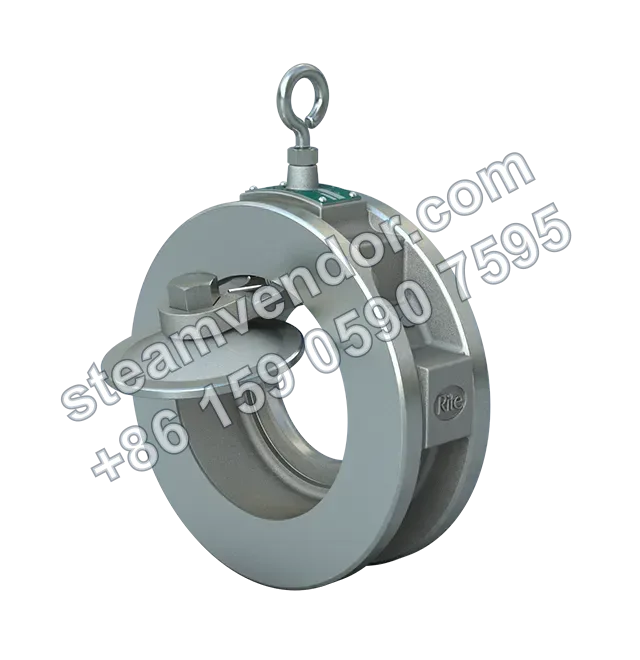
Bray/Rite® check valve product image
Bray Bray/Rite® Wafer Combination Swing Check Valve (1" to 60" Pump Protection and Water Hammer Control)
Wafer combination swing check valve, fully open at low flow velocity, for pump protection and water hammer control.
Genuine product assurance
We can help verify product data and purchasing details.
Model confirmation
Confirm model, connection and key options before ordering.
After-sales support
After-sales communication support is provided according to the order agreement.
Specifications
- Size Range
- 1" to 60" (25mm to 1500mm)
- Body Type
- Wafer, flanged, RTJ
- Body Materials
- ASTM A 126 CLB, ASTM A 395, ASTM A 216 WCB, ASTM A 351 CF8M, titanium
- Disc Material
- Standard SS316 (or higher grade)
- Seat Materials
- BUNA-N, EPDM, A240-304 (inserted or integral), PFTE, fluoroelastomer
- Leakage Class
- Zero leakage
- Maximum Allowable Operating Pressure
- API 594 (150, 300, 600, 900, 1500, 2500); ASME (125, 150, 300); PN (10, 16, 25, 40)
- Minimum Flow Velocity at Full Open
- Average 3ft/s
- Design Standards
- API 594, ASME B16.34
- Test Standards
- API 598, ASME B16.34
- Face-to-Face Standards
- ANSI, API 594
- Certifications
- API 6FD, CE, CRN, FM, NSF-61, PED, ULC
Application scenarios
Industrial Pump Discharge Check Protection
Installed in pump discharge piping to prevent media backflow and reduce water hammer caused by pump shutdown or flow-direction changes through check action, thereby protecting the pump.
Low-Velocity, Variable-Flow Process Piping with Control Valves
Suitable for process piping equipped with control valves and subject to flow variations. The optimized bore and disc profile enable the valve to fully open at low flow velocities averaging 3 ft/s, helping reduce pressure drop and vibration caused by a partially open disc while minimizing wear on internal components.
Selection points
Rite-sized design for full opening at low flow velocity
The Bray/Rite internal diameter and disc geometry are optimized to achieve full opening at an average low flow velocity of 3 ft/s. Unlike conventional full-size swing check valves, which require higher flow velocities to open fully, this design helps avoid throttling resistance and water hammer risks caused by a partially open disc, making it suitable for pump systems with significant flow variation.
Limited internal movement reduces wear
Internal components undergo limited movement during operation, reducing mechanical wear caused by repeated disc oscillation and helping extend valve service life and maintenance intervals.
Multiple seat material options
Multiple seat material options are available, including BUNA-N, EPDM, PTFE, and fluoroelastomer. Selection can be matched to the medium compatibility and temperature requirements.
Wide size range
This series covers sizes from 1 inch to 60 inches (25mm to 1500mm), making it suitable for piping systems with different line sizes.
Multiple body configurations
Wafer, flanged, and RTJ body configurations are available to accommodate different piping connection methods.
Installation & maintenance notes
Confirm installation orientation and medium flow direction
During installation, confirm the medium flow direction according to the markings on the valve body to ensure that the disc opens and closes in the designed direction and provides effective check and pump protection.
Ensure the disc can open fully
During installation and commissioning, consider the actual flow rate and ensure that the disc can open fully under normal operating conditions. An incompletely open disc may increase flow resistance and pressure drop, cause disc vibration, and increase the risk of water hammer.
Verify seat material compatibility with the temperature conditions
Before installation, verify based on the actual model and configuration that the selected seat material is compatible with the medium and temperature conditions. This helps prevent seal failure or leakage caused by unsuitable materials.
Confirm compatibility between the valve and piping connections
Before installation, confirm that the valve end configuration matches the piping connection type and keep the valve and piping properly aligned. Uneven connection loads may result in seal failure or external leakage.
FAQ
How do Bray/Rite check valves work?
Bray/Rite check valves use a wafer-style swing design and flow-actuated characteristics to achieve near-full disc opening at low flow velocities, reducing wear and pressure loss while protecting pumps and controlling media flow.
How does this valve perform at low flow velocities compared with conventional valves of the same size?
Bray/Rite® reaches the fully open position at low flow velocity (average 3 ft/s), compared with conventional full-size swing valves that typically require approximately 11 ft/s to fully open. This provides more stable fluid control and reduces the risk of water hammer.
What are the main technical advantages of this valve series?
Rite sizing optimizes the valve bore and disc geometry to reduce wear, extend service life, and enable smooth opening and closing at low pressure, improving controllability and durability in multi-media piping systems.
What applications is it suitable for, and what value does it provide to the system?
It is suitable for applications requiring pump protection and reduced water hammer risk. It provides more stable opening and shutoff in pipelines with control valves and multi-media flow, improving system reliability.
What information should be considered during selection to ensure a proper match?
Confirm the size range (1"〜60"), body material, gasket material, seat material, leakage class, seat and disc materials, as well as end connections (wafer, flanged, RTJ) and design standards to match the medium, temperature, and pressure rating.
Documents
IOM Manual - Bray/Rite® Dual-Plate Wafer Check ValveManual · EnglishIOM Manual - Bray/Rite® Single-Plate Wafer Swing Check ValveManual · EnglishCheck Valve Sizing Program - CheckSize Check Valve Sizing ToolProduct information · EnglishSales Data Sheet - External Lever, Spring, and Counterweight - Rite® Series SA1 Special ApplicationProduct information · ChineseSales Data Sheet - Dual-Balanced Counterweight - Rite® Series SA10 Special ApplicationProduct information · ChineseSales Data Sheet - External Backflush Lever and Spring - Rite® Series SA3 Special ApplicationProduct information · ChineseSales Data Sheet - External Compression Spring - Rite® Series SA40 Special ApplicationProduct information · ChineseSales Data Sheet - External Compression Spring and Counterweight - Rite® Series SA40A Special ApplicationProduct information · ChineseSales Data Sheet - Foot Valve with Strainer Basket - Rite® Series SA6 Special ApplicationProduct information · ChineseSales Data Sheet - RITE® Series 211 Single-Plate Flanged Swing Check ValveProduct information · ChineseSales Data Sheet - External Lever and Spring - Series SA1 Special ApplicationProduct information · EnglishSales Data Sheet - Backflush Lever and External Spring - Series SA3Product information · EnglishSales Data Sheet - External Position Indicator - Series SA4 Special ApplicationProduct information · EnglishSales Data Sheet - External Compression Spring and Counterweight - Series SA40AProduct information · EnglishSales Data Sheet - External Backflush Lever - Series SA4A Special ApplicationProduct information · EnglishSales Data Sheet - Foot Valve with Strainer Basket - Series SA6Product information · EnglishSales Data Sheet - Single-Plate Wafer Swing Check Valve - Integral Hard Seat, Rite® Series 205Product information · EnglishSales Data Sheet - Single-Plate Wafer Swing Check Valve - Integral Soft Seat, Rite® Series 205Product information · EnglishSales Data Sheet - Single-Plate Wafer Swing Check Valve - Seat Ring Hard Seat, Rite® Series 205Product information · EnglishSales Data Sheet - Single-Plate Wafer Swing Check Valve - Seat Ring Soft Seat, Rite® Series 205Product information · EnglishSales Data Sheet - Single-Plate Wafer Swing Check Valve - Integral Hard Seat, Rite® Series 210Product information · EnglishSales Data Sheet - Single-Plate Wafer Swing Check Valve - Integral Soft Seat, Rite® Series 210Product information · EnglishSales Data Sheet - Single-Plate Wafer Swing Check Valve - Seat Ring Hard Seat, Rite® Series 210Product information · EnglishSales Data Sheet - Single-Plate Wafer Swing Check Valve - Seat Ring Soft Seat, Rite® Series 210Product information · EnglishSales Data Sheet - Single-Plate Flanged Swing Check Valve - Integral Hard Seat, Rite® Series 211Product information · EnglishSales Data Sheet - Single-Plate Flanged Swing Check Valve - Integral Soft Seat, Rite® Series 211Product information · EnglishSales Data Sheet - Single-Plate Flanged Swing Check Valve - Seat Ring Hard Seat, Rite® Series 211Product information · EnglishSales Data Sheet - Single-Plate Flanged Swing Check Valve - Seat Ring Soft Seat, Rite® Series 211Product information · EnglishSales Data Sheet - Single-Plate Wafer Swing Check Valve - Integral Soft Seat, Rite® Series 212-312Product information · EnglishSales Data Sheet - Single-Plate Flanged Swing Check Valve - Integral Soft Seat - Rite® PVC SeriesProduct information · EnglishSales Data Sheet - Rite® Serie SA1 External Lever, Spring, and CounterweightProduct information · EnglishSales Data Sheet - Rite® Serie SA3 Backflush Lever and External SpringProduct information · EnglishSales Data Sheet - External Compression Spring and Weight - Rite® Serie SA40 Check Valve AccessoryProduct information · EnglishSales Data Sheet - Foot-Type Check Valve with Basket, Serie SA6Product information · English